
Select Your Region
Email Newsletter Signup

Sign up for water conservation tips and news.


    Thanks for signing up for the Water - Use it Wisely Newsletter!

    Please select your interest level:

We'll never sell or distribute your email address to third parties. Read our privacy policy for more information.

Blog

Archive for the ‘Xeriscape’ Category

Desert Plants Are Great at Multi-Tasking

Wednesday, February 3rd, 2010

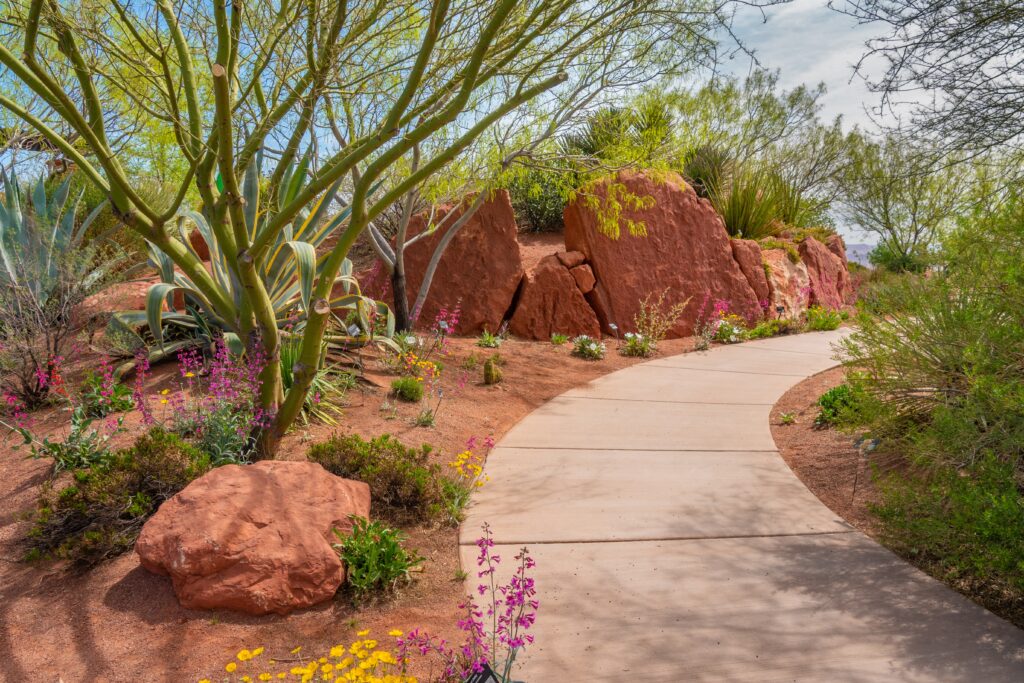
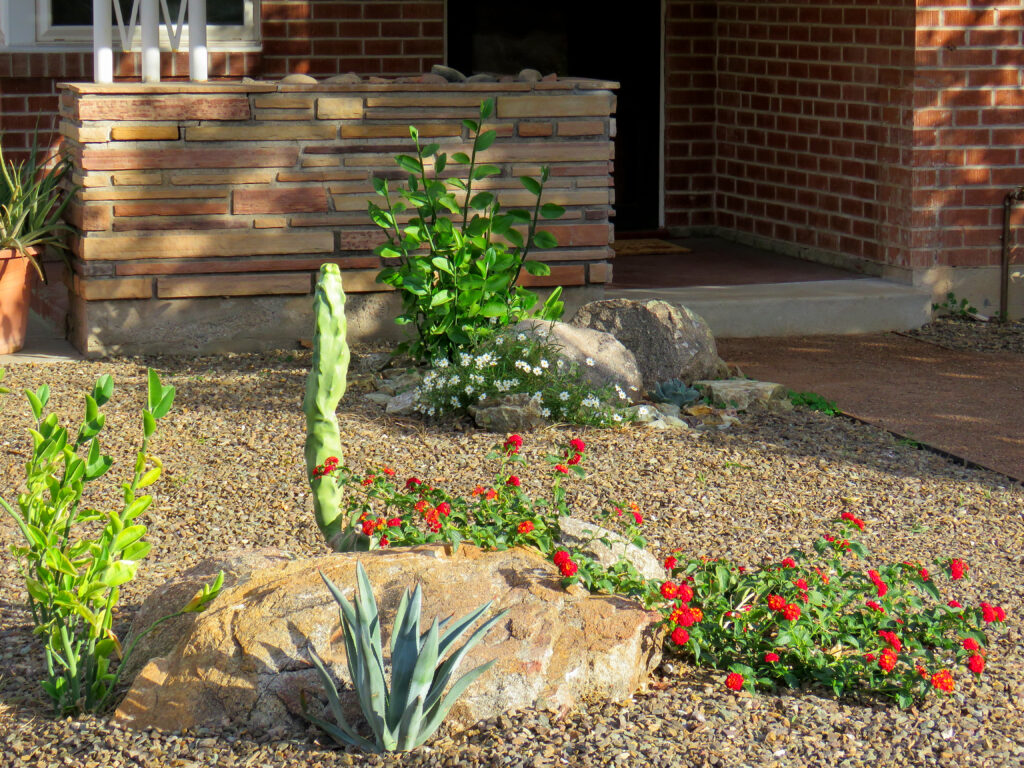
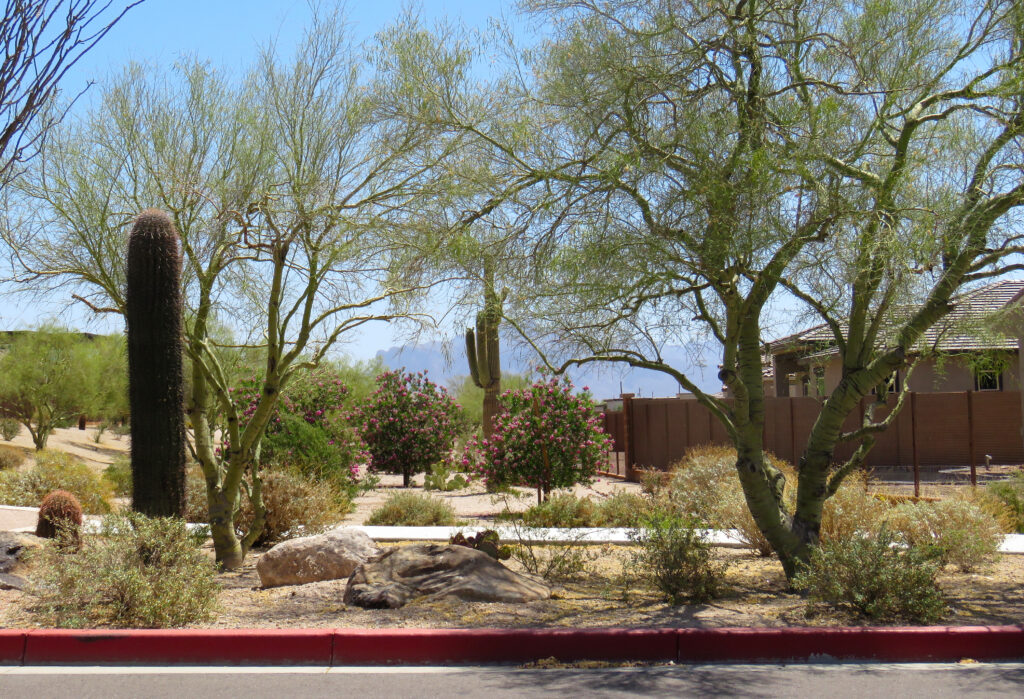
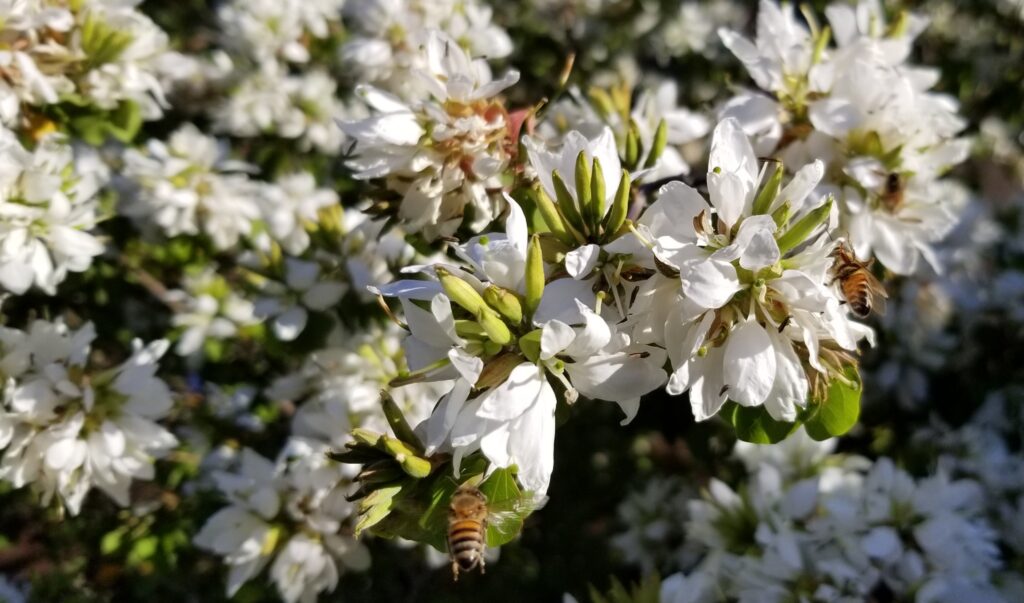
February is a great time to plant in the low desert as temperatures are still cool and roots can get established before the heat sets in. Whether planting an entire landscape or just replacing lost plants, hundreds of desert plants are available for just about any function in your landscape. Would you like to attract birds or butterflies to your yard? Desert plants are up for the challenge! Perhaps you are looking for year-round color, or maybe a living fence or a cool, shady retreat?

This hybrid palo verde shows two desert adaptations - small leaves are more water efficient and a green stem and trunk allow the tree to photosynthesize and make food even if dry conditions cause the leaves to drop. Photo by Donna DiFrancesco

This hybrid palo verde shows two desert adaptations - small leaves are more water efficient and a green stem and trunk allow the tree to photosynthesize and make food even if dry conditions cause the leaves to drop. Photo by Donna DiFrancesco

Each low-water-use plant can save you up to 550 gallons a year.

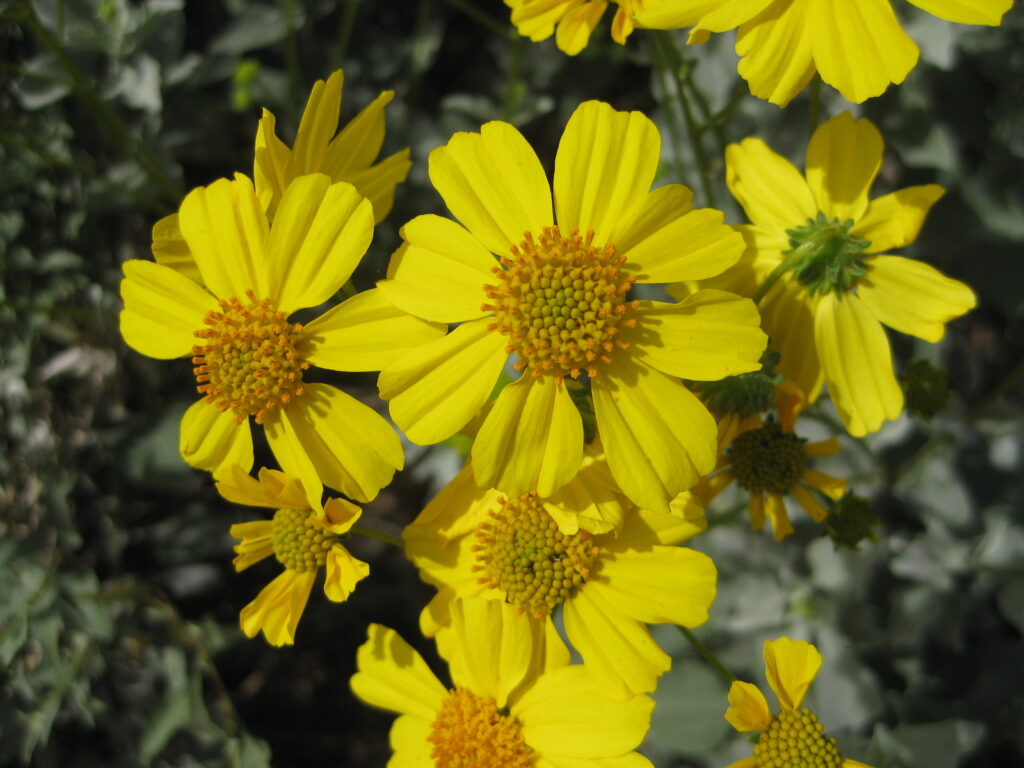
Silvery leaves of the brittlebush help the leaves reflect sunlight and stay cooler. After blooming, many native birds feed on the seeds. Photo by Donna DiFrancesco

Silvery leaves of the brittlebush help the leaves reflect sunlight and stay cooler. After blooming, many native birds feed on the seeds. Photo by Donna DiFrancesco

By selecting plants that are well adapted to our desert climate you’ll have less maintenance and more time and money while enjoying a more attractive landscape. Learn plant selection tips and how plants provide many functions for the landscape from the City of Mesa’s February $ustainability $avings Tip (PDF). You may also want to attend Mesa’s February Living Green Workshop titled Landscape Plants for Shade, Color & Wildlife on Saturday, February 13th at 1:30 p.m. at the Mesa Main Library, 64 E. First Street.

Leaf hairs reflect sun and help maintain leaf moisture on this fragrant native desert lavender. Photo by Donna DiFrancesco

Leaf hairs reflect sun and help maintain leaf moisture on this fragrant native desert lavender. Photo by Donna DiFrancesco

Mesa is one of seventeen Water – Use It Wisely regional partners, many of whom offer water-wise workshops. Check out all of the partner programs from the Water – Use It Wisely calendar on our home page. You can also check out all of our landscape plants and Xeriscape links, including rebates available on our Water – Use It Wisely local resources page.

Hesperaloe blooms not only attract hummingbirds, but also native birds like this verdin. Photo by U.A. Sinclair

Hesperaloe blooms not only attract hummingbirds, but also native birds like this verdin. Photo by U.A. Sinclair

A painted lady butterfly finds nectar to drink on blooming sand verbena wildflowers. Photo by Donna DiFrancesco

A painted lady butterfly finds nectar to drink on blooming sand verbena wildflowers. Photo by Donna DiFrancesco

Colorful penstemons are always a magnet for hummingbird. Photo by Jeff Lee

Colorful penstemons are always a magnet for hummingbird. Photo by Jeff Lee

Fall Planting in the Arizona Desert

Tuesday, October 6th, 2009

Planting in Fall
The fall planting season has arrived! Temperatures are cooler, and it’s a great time to replace plants you may have lost during the hot summer.

Why is fall planting so good for plants? Soil temperatures are still warm, encouraging root growth and development and allowing plants to get much better established before next summer’s heat sets in. Also, with cooler temperatures, plants need less water and it is a much more forgiving time of year to put new plants in the ground. Forget to water just one day in the summer, and your new plants can be toast. From the fall season through spring, water newly planted plants once every 3-4 days and gradually increase the number of days between watering as plants get established.

Always plan before you plant!

Whether you are planting a single plant or an entire landscape, look at plant characteristics to make sure they will fit into the space you have available and to be sure it will perform the function you are looking for. Good planning is a worthwhile investment of time that will payoff with a more attractive, easy to maintain, and useful home landscape. Water – Use It Wisely Arizona partners have put together great information on local planting, called Plant Now for the Future that includes planting instructions, plant placement and other design ideas. Also be sure to explore the on-line calendar on the Water – Use It Wisely home page and find out about all of the fall landscape workshops going on in the Valley.

Mulching used in planting

There are exceptions to fall planting. All bare root plants, including roses, pecan, and fruit trees are generally planted in late December or January when they are dormant. Palm trees and other tropical plants will do best if planted during the spring or summer. When you purchase plants for your home landscape, be sure to look for healthy, well-grown plants. Don’t forget to add 2-3 inches of compost or mulch to the surface of the soil after planting and before covering with granite or rock (keep the mulch a few inches away from the stem or tree trunk). Check with your local plant nursery for best results, but don’t forget local plant sales put on by botanical gardens or others. Here’s a list of upcoming fall plant sales:

  • Master Gardener Fall Plant Sale – Oct. 10 from 9 a.m. to 4 p.m. at University of Arizona Cooperative Extension Office, 4341 E. Broadway Road in Phoenix. Contact them at 602-827-8200 x311 or http://cals.arizona.edu/maricopa/garden/plantsale.htm
  • Desert Botanical Garden Fall Plant Sale – Oct. 16 (members only), Oct 17 & 18 open to everyone. Contact them at 480-941-1225 or www.dbg.org
  • Boyce Thompson Arboretum Fall Plant Sale – Oct. 9 - 25, located at U.S. Highway 60 in Superior. Contact them at 520-689-2723 or http://ag.arizona.edu/bta
  • Local Nurseries – Your local nursery will often have fall promotions. Find your closest local nursery by visiting the Arizona Nursery Association Web site at http://azna.org/retail/

Don’t forget to plant seeds!

Wildflowers and CatcusIt’s also the time of year to plant seeds. Are you thinking of overseeding your bermudagrass? First, see the Top Ten Reasons Not to Overseed with Winter Rye. If you decide you still want to overseed, keep it as efficient as you can with the timing and watering and limiting the areas. Find helpful details at the University of Arizona site at http://ag.arizona.edu/turf/tips894.html

Are you looking for carpets of golden poppies or spikes of violet lupines? Fall is the time to sow many of the wildflower seeds in your landscape. If possible try to sow shortly before one of our October or November rains. For good details on wildflower gardening, request our free booklet, “Landscape Plants for the Arizona Desert” or you can find information at the Desert Botanical Garden Web Site at www.desertbotanical.org/index.php/gardening/growingguides/ground/wildflowers.
Wild Seed, Inc., is one of our best local wildflower seed companies. Look for the seed at plant sales or your local nursery, or contact them at 602-276-3536.

Is your yard ready for a makeover? New class will show you how…

Thursday, August 27th, 2009

If you’ve been considering converting your grass into a colorful low-water-use landscape, a local class will show you the easy step-by-step methods. And, you may even be eligible for a rebate!

The City of Chandler is presenting a free workshop, Basic Yard Makeovers on Tuesday, September 1, from 6:30-8:30 p.m. Call 480-782-3580 to register for the program.

Many of the partners in the Arizona Water - Use It Wisely coalition offer FREE workshops or classes with expert speakers willing to share their knowledge. You can learn about designing a colorful water-saving, low maintenance landscape, programming an irrigation controller, attracting wildlife to your yard, selecting low-water-use plants, pruning, watering your landscape, making compost, or herb and vegetable gardening in the low desert.  There are even walking tours of local Xeriscape gardens.

Explore the new on-line calendar on the Water – Use It Wisely home page and find out more about conservation events scheduled in the metropolitan Phoenix area. See for yourself.  Click on the calendar on the left navigation bar ‘Learn about local events & classes’ to see what’s happening in your city or town.

Create a Desert Winter Wonderland

Wednesday, November 12th, 2008

The weather outside is far from frightful – in fact, it’s downright delightful.  But that doesn’t mean you can’t create your own “Winter Wonderland” in the Arizona desert.  The winter months provide a perfect opportunity to experiment with container gardening, which can add some amazingly colorful – and even flavorful – variety to your landscape and garden.  Landscaping with containers is also a great option for winter visitors who may be looking for ways to quickly and inexpensively add some Arizona beauty to their patios and entryways.

Many types of low-water use plants lend themselves to container planting, especially cacti and succulents.  There are a number of possibilities that look great during the winter months. For container gardening success, check out the following ideas:

Plant Selection

  • Consider cacti, agaves, and a great selection of other succulents such as aloes, which will provide spikes of winter blooms that attract hummingbirds.
  • Desert annuals and perennials will provide lots of showy color.  Try early blooming Mexican poppy and penstemons, or long blooming angelita daisy, blackfoot daisy, and moss verbena.  Combine flower types and colors for added visual interest.  Mix and match colors to find the combination that’s most pleasing to you.
  • Small, colorful shrubs are good performers. Look for plumbago, bush morning glory, purple hop bush, and dwarf bottlebrush.
  • Herbs also do well in containers and provide the benefit of fragrance and for spicing up your cooking. Tough performers include trailing rosemary, lavender, oregano, thyme, and lemon grass. Many will cascade nicely over hanging baskets.
  • Don’t hesitate to combine plants together in pots. Just don’t mix cacti and succulents with plants that will need more water.

Choosing the Right Pot

  • Plants don’t like to be crowded, so buy the bigger pot, as opposed to the smaller one. Plant roots will stay cooler during warmer months and will also dry out less quickly.
  • No matter what pot you choose, allow for drainage.  Arizona’s water is highly
  • alkaline and the salts can harm plant roots.  Make sure there are holes in the bottom of the pot; place screens over the holes so you’re draining water, not    soil; and, place pots on pot feet, bricks or iron stands, rather than saucers.
  • Clay pots are most popular, but they don’t always hold up well to the moisture.  To preserve them, line the inside with plastic before putting in soil and plants.  Punch a hole through the plastic in the bottom of the pot to allow water to drain. Inserting a plastic pot inside a clay planter is also an option.
  • Pots made of light-weight Styrofoam-type materials are great for making it easier to move plants to a protected location on colder nights.  They also allow you to move your plants in and out of the shade as the seasons change.

Maximize Your Soil

  • A good quality soil mix is probably the most important ingredient to successful container gardening.  Choose a cactus/succulent mix for those varieties. For everything else use a lightweight packaged potting soil or a blend of 1/3 potting soil, 1/3 vermiculite and 1/3 pre-moistened peat moss.
  • Use a timed-release fertilizer.  Typically, a three- or four-month release fertilizer is sufficient for container gardening.

Water Appropriately

  • Container plants have restricted root systems and less soil compared to plants established in the ground, so will typically need more frequent watering than your landscape plants.
  • Be sure to water thoroughly each time, then allow the soil to dry moderately in between.
  • Keep in mind that weather and plant growth over time will change water needs.

Visit www.wateruseitwisely.com for more tips on plant selection, outdoor water use, and landscaping.  If you have an idea you’d like to share about container gardening, please write us in the comments box below.  We’d love to hear from you.