
Select Your Region
Email Newsletter Signup

Sign up for water conservation tips and news.


Thanks for signing up for the Water - Use it Wisely Newsletter!

Please select your interest level:

We'll never sell or distribute your email address to third parties. Read our privacy policy for more information.

Blog

Posts Tagged ‘lawn watering’

WUIW on TV: Adjust Your Irrigation Timer

Wednesday, November 23rd, 2011

Here’s a great water saving tip: adjust your irrigation timer when the seasons change. Connie Speelman, from the Town of Queen Creek, one of our Arizona Regional Campaign Partners, explains to us that with cooler weather and lower evaporation rates, dialing your timer back is a good idea.

For more information, watch her interview on “Your Life A to Z” on local Channel 3:


WUIW on TV: Paradise Valley Xeriscape Demonstration Garden

Thursday, November 10th, 2011

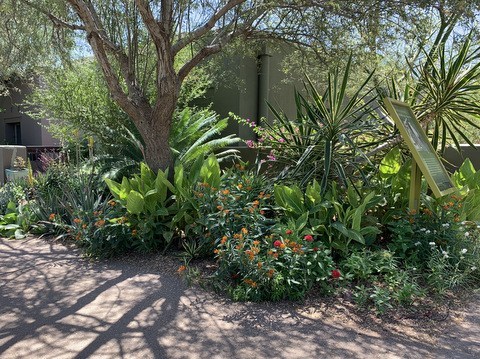
Join us for another interview on “Your Life A to Z” on Arizona’s local Channel 3 to learn more about the Paradise Valley Xeriscape Demonstration Garden. Jake Lenderking and Sally Ceccerelli-Wolf from our Regional Partner, Arizona American Water, tell us about how a demonstration garden can help someone who is planting in their yard choose low water-use plants to beautify their landscaping. The demonstration garden has all sorts of different native plants that will grow and blossom with the seasons, and people can come take a look and get an idea of what their yard will look like if they chose a specific plant.

Furthermore, since up to 70% of your water use is outdoors, choosing a xeriscape landscape for your yard can help you conserve water and save on your utility bills.

Watch the interview on “Your Life A to Z” on local Channel 3 here:


WUIW on TV: Reduce Your Outdoor Water Use

Tuesday, October 11th, 2011

Did you know that up to 70% of your water use is outdoors?

Water – Use It Wisely is being featured on Arizona’s local Channel 3′s Your Life A to Z with some easy and practical ways to save water. Arizona Regional Campaign Water Partner, the City of Mesa, sent their Conservation Specialist, Donna DiFrancesco, to be interviewed by Lisa Haffner on this special segment on outdoor water use.

Check out the video on our YouTube Channel here:


For more information about landscape care and to see our landscape guides, please click here.

Next week’s segment: Take The Home Water Challenge and Find Those Sneaky Leaks. Stay tuned!

WUIW on TV: Should You Overseed your Lawn?

Wednesday, October 5th, 2011

This Fall, Water – Use It Wisely is being featured on Arizona’s local Channel 3′s Your Life A to Z with some easy and practical ways to save water. Last Wednesday (09/28) our Arizona Regional Campaign Water Partner, the City of Scottsdale, sent their Water Conservation Specialist, Elisa Klein, to be interviewed by Lisa Haffner. They discussed the water and cost saving advantages of not overseeding your lawn in preparation for the cooler months.

Check out the video on our YouTube Channel here:

For more information about overseeding, read our blog post on the topic here.

Next week’s segment: Reduce Your Outdoor Water Use. Stay tuned!

Three Easy Ways to Reduce Your Outdoor Water Use

Wednesday, October 5th, 2011

Over half of household water – in some cases up to 70% is used outdoors. That means saving water in your landscape is one of the best and easiest ways to reduce your outdoor water use. We’ve got three great resources to make you the top water miser in the neighborhood:

Photos and plant charts help you with plant selection.

  1. Xeriscape is defined as water efficient, creative landscaping that guides you with seven landscape principles to create a beautiful, healthy and water efficient yard. And, no! It’s not just rocks and cactus. Details can be found in Xeriscape: Landscaping with Style in the Arizona Desert.
  2. Use Water Thrifty Plants like the bold, armored agaves or like the fragrant-flowered acacias. There are hundreds of beautiful low-water-use plants that are available for our region of the Sonoran Desert. Learn more from Landscape Plants for the Arizona Desert.
  3. Water Efficiently to reduce your water use by 30-50%. If you’ve used the Xeriscape principles and planted low-water-use plants, it’s even more important to make sure you are watering properly. It is very common by residents and even commercial landscapers to over water desert landscapes. Check out our Landscape Watering by the Numbers: A Guide for the Arizona Desert.

Proper watering techniques are provided for all types of Arizona landscapes.

These resources are all available online, but free booklets are also available. All fifteen Water – Use It Wisely regional partners, offer these guides to their water customers. Contact information is available on our partner page.

Our three must-have guides.

Do You Need To Overseed Your Lawn?

Tuesday, September 20th, 2011

It’s one of the great debates. Like Yankees vs. Red Socks, Democrats vs. Republicans, cat lovers vs. dog lovers, there are those who overseed their grass vs. those who don’t. Why the great debate? Well, it’s hard to say exactly how it all started, but it likely has something to do with American’s love of lush green lawns and doing whatever it takes to have them.

The fact that Bermuda grass and its hybrid varieties are still the best performers in Arizona’s low desert regions probably has something to do with it. While Bermuda thrives in our summer heat, around late October to mid-November, this summer grass will go dormant turning a nice shade of golden-tan.

Swooping in comes the promise of an emerald-green delicate carpet of ryegrass. The ritual starts in September but may go as late as mid-November. You start seeing mowers surrounded in a cloud of dust as landscapers start scalping lawns in preparation of overseeding. The scalping, or extra low mowing, allows the seed better contact with the soil below, and then the daily multiple waterings begin to ensure germination of seed.

Just how much water does it take to have this winter luxury? Over 8,000 gallons of water for every 1,000 square feet of grass is needed – somewhat difficult to justify when water is such a precious resource in Arizona. By learning to accept a less than lush lawn during the winter months, property owners will not only realize significant water savings for themselves and their community, they will also save a lot of time and money. So if you’re looking for a reason not to overseed, take a look at these …

Top Ten Reasons Not to Plant a Winter Lawn:

10. Save time – No need to scalp the lawn, prepare the seedbed, seed, water, or mow.

9. Save water – Getting ryegrass seed to germinate requires watering three times a day or more, and spikes in water usage are always noticeable during the months of October and November when winter rye is seeded. By not overseeding, over 8,000 gallons of water can be saved for every 1,000 square feet of grass each season. In contrast, dormant Bermuda only needs to be watered once a month from November to February – even less if we get winter rains.

8. Preserve water quality – Less fertilizers and pesticides will be needed. Much of our water pollution comes from runoff of these products from urban landscapes.

7. Save money – Save on the cost of seed, labor, water, and gasoline for mowing. Also, wastewater rates are often determined by your winter water usage. If you use more water in the winter, your utility bill wastewater rates will be higher the rest of the year.

6. Save landfill space – Scalping Bermuda grass creates a great deal of waste for the landfills. Ryegrass clippings can create additional waste all winter and spring.

5. Save the air – Gasoline mowers and other lawn equipment contributes to our air pollution problems, and the scalping process releases dust and other particles into the air.

4. Decrease noise pollution – Mowers, weed whackers, and leaf blowers have become a major source of background noise in many neighborhoods. The drone of lawn equipment contributes to an already noisy world.

3. Save frustration – Problems with seed germination, fertilizers, diseases, and irrigation are all common when planting a winter lawn.

2. Set an example -We live in a desert and this is an opportunity to demonstrate your community leadership with a responsible outlook towards our water supply.

And the number one reason not to plant a winter lawn …

1. Give your Bermuda a break – Overseeding can be stressful for your Bermuda grass. In the fall, scalping the summer grass before dormancy doesn’t allow for adequate storage of energy in the roots. In the spring, the rye competes with Bermuda, and customers often withhold water to transition from winter to summer grass. Unfortunately, this will also stress the Bermuda.

You say you have to overseed…

OK, OK, so you say that you have to overseed. Either your spouse will divorce you if you don’t, your HOA requires you to overseed or you’ll get fined (and you’re still working on changing that code), or you just have to put your toes into some green grass in the winter and you can’t afford a trip south of the equator?

Here are some tips to keep it as water efficient as possible:

  1. Follow these proper steps for Fall Overseeding from Western Sod.
  2. Don’t overseed too early. Mid-October to mid-November is best. Less water will be needed and the rye won’t get stressed from the higher temperatures of early fall. Check out the desert lawn care guide linked on our Water – Use It Wisely resources page for extra care tips.
  3. Don’t overseed the entire yard if you don’t have to. Just do select areas.
  4. Water your grass properly. To germinate the grass seed, apply light, frequent watering about four times a day. Cut back on the frequency once grass is germinated. For winter watering schedules check out our Landscape Watering by the Numbers guide. It tells you how much and how often to water to keep your grass healthy and beautiful without water waste.
  5. If your grass is in your back yard, you might want to consider having rye grass only and having no grass (or watering) in the summer months. We’re still not sure how well this would work (weeds, dust, etc.), but if you try it and it works well, let us know.
  6. When you’ve had enough of this vicious cycle, consider removing all the grass. Yep, we have a guide for that too. This turf removal guide is another link on our Water – Use It Wisely resources page.

For the Love of Green Grass

Wednesday, September 30th, 2009

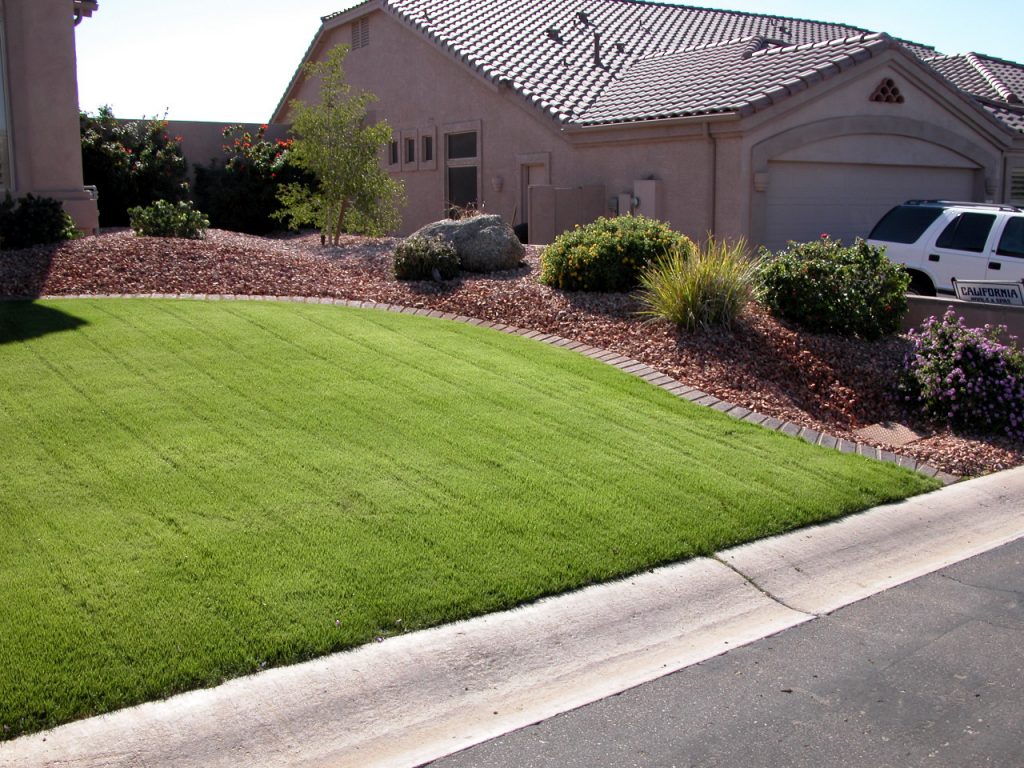
Green grass in a lovely front yard

It’s one of the great debates. Like Yankees vs. Red Socks, Democrats vs. Republicans, cat lovers vs. dog lovers, there are those who overseed their grass vs. those who don’t. Why the great debate? Well, it’s hard to say exactly how it all started, but it likely has something to do with American’s love of lush green lawns and doing whatever it takes to have them.

The fact that Bermuda grass and its hybrid varieties are still the best performers in Arizona’s low desert regions probably has something to do with it. While Bermuda thrives in our summer heat, around late October to mid-November, this summer grass will go dormant turning a nice shade of golden-tan.

Swooping in comes the promise of an emerald-green delicate carpet of ryegrass. The ritual starts in September but may go as late as mid-November. You start seeing mowers surrounded in a cloud of dust as landscapers start scalping lawns in preparation of overseeding. The scalping, or extra low mowing, allows the seed better contact with the soil below, and then the daily multiple waterings begin to ensure germination of seed.

Just how much water does it take to have this winter luxury? Over 8,000 gallons of water for every 1,000 square feet of grass is needed – somewhat difficult to justify when water is such a precious resource in Arizona. By learning to accept a less than lush lawn during the winter months, property owners will not only realize significant water savings for themselves and their community, they will also save a lot of time and money. So if you’re looking for a reason not to overseed, take a look at these …

Top Ten Reasons Not to Plant a Winter Lawn:

10. Save time – No need to scalp the lawn, prepare the seedbed, seed, water, or mow.

9. Save water – Getting ryegrass seed to germinate requires watering three times a day or more, and spikes in water usage are always noticeable during the months of October and November when winter rye is seeded. By not overseeding, over 8,000 gallons of water can be saved for every 1,000 square feet of grass each season. In contrast, dormant Bermuda only needs to be watered once a month from November to February – even less if we get winter rains.

8. Preserve water quality – Less fertilizers and pesticides will be needed. Much of our water pollution comes from runoff of these products from urban landscapes.

7. Save money – Save on the cost of seed, labor, water, and gasoline for mowing. Also, wastewater rates are often determined by your winter water usage. If you use more water in the winter, your utility bill wastewater rates will be higher the rest of the year.

6. Save landfill space – Scalping Bermuda grass creates a great deal of waste for the landfills. Ryegrass clippings can create additional waste all winter and spring.

5. Save the air – Gasoline mowers and other lawn equipment contributes to our air pollution problems, and the scalping process releases dust and other particles into the air.

4. Decrease noise pollution – Mowers, weed whackers, and leaf blowers have become a major source of background noise in many neighborhoods. The drone of lawn equipment contributes to an already noisy world.

3. Save frustration – Problems with seed germination, fertilizers, diseases, and irrigation are all common when planting a winter lawn.

2. Set an example -We live in a desert and this is an opportunity to demonstrate your community leadership with a responsible outlook towards our water supply.

And the number one reason not to plant a winter lawn …

1. Give your Bermuda a break – Overseeding can be stressful for your Bermuda grass. In the fall, scalping the summer grass before dormancy doesn’t allow for adequate storage of energy in the roots. In the spring, the rye competes with Bermuda, and customers often withhold water to transition from winter to summer grass. Unfortunately, this will also stress the Bermuda.

You say you have to overseed…

OK, OK, so you say that you have to overseed. Either your spouse will divorce you if you don’t, your HOA requires you to overseed or you’ll get fined (and you’re still working on changing that code), or you just have to put your toes into some green grass in the winter and you can’t afford a trip south of the equator?

Here are some tips to keep it as water efficient as possible:

  1. Don’t overseed too early. Mid-October to mid-November is best. Less water will be needed and the rye won’t get stressed from the higher temperatures of early fall. Check out the desert lawn care guide linked on our Water – Use It Wisely resources page for extra care tips.
  2. Don’t overseed the entire yard if you don’t have to. Just do select areas.
  3. Water your grass properly. We have the perfect tool for you to figure out how to do that, our Landscape Watering by the Numbers guide. It tells you how much and how often to water to keep your grass healthy and beautiful without water waste.
  4. If your grass is in your back yard, you might want to consider having rye grass only and having no grass (or watering) in the summer months. We’re still not sure how well this would work (weeds, dust, etc.), but if you try it and it works well, let us know.
  5. When you’ve had enough of this vicious cycle, consider removing all the grass. Yep, we have a guide for that too. This turf removal guide is another link on our Water – Use It Wisely resources page.