
Select Your Region
Email Newsletter Signup

Sign up for water conservation tips and news.


    Thanks for signing up for the Water - Use it Wisely Newsletter!

    Please select your interest level:

We'll never sell or distribute your email address to third parties. Read our privacy policy for more information.

Blog

Posts Tagged ‘water conservation tips’

U.S. uses less water in 2005 than 1975 despite population increase. Good news right?

Tuesday, November 3rd, 2009

Technically, the nation is using less water in 2005 than it did in 1975 despite a 30 percent population increase over that same time. Good news right? Of course. But, according to the same Geological Survey report, human consumption has also steadily increased over that time.

That can be expected considering the population increase, and Andrew Nusca and Larry Dignan of “Smart Planet” do a great job of breaking down the survey here. The bottom line is the downturn in water-use has stemmed from more effecient technologies in irrigation systems and power plants. This, of course, is great news but we can make it even better by continuing to do our part as consumers. It may not seem like a low flow shower head or reusing water from the dishes makes a difference, but it does. In fact, it makes a big difference.

The last 30 years are obviously a step in the right direction but water is more scarce now than ever and it’s going to take all of our efforts to continue to make a difference. It’s easy. Start here and spread the word.

WUIW debuts video series - “Tinkling with Ryan”

Monday, October 19th, 2009

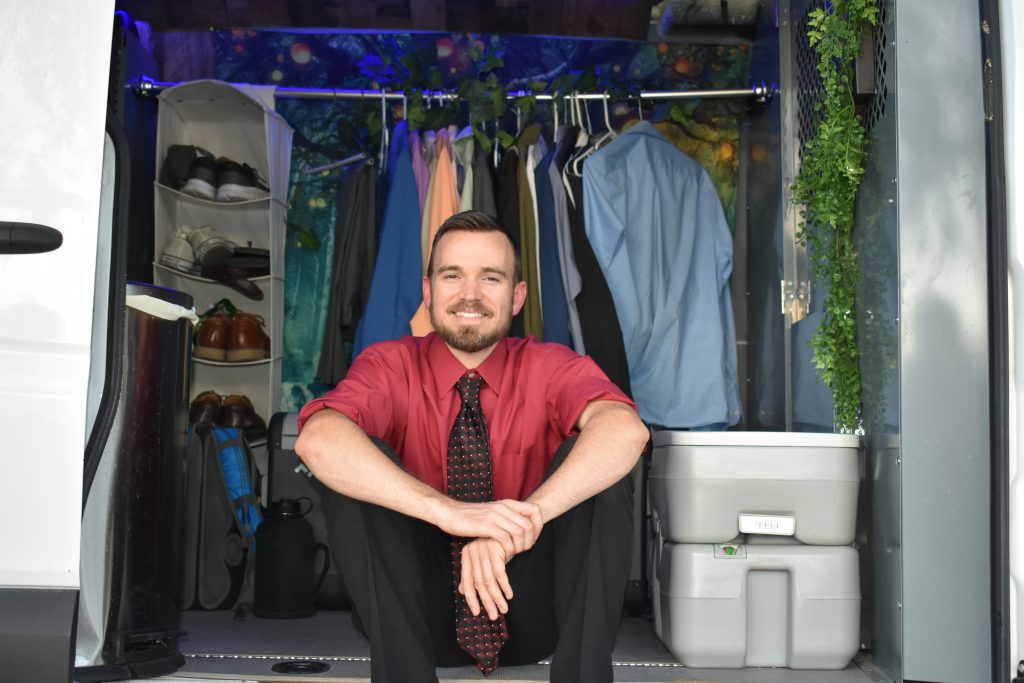
Water - Use It Wisely invites you to check out its new video series, “Tinkling with Ryan.” The series provides regular entertaining takes on water conservation news and tips. In the first episode, Ryan shows you how easy it is to install a water-saving shower head. Believe me, if this guy can do it so can you.

Guest Blog Feature: “Conservation Covers” covers your pool…

Thursday, October 15th, 2009

The following is a guest blog feature courtesy of Conservation Covers

cover

To Pool Owners,

It always astounds me that the largest WASTES of water and electricity in the home are ignored. And by largest we really mean the largest – your pool.

By simply covering your pool you reduce pump and chemical usage by 75%, instantly reducing water evaporation to ZERO!! The swimming pools in California, Arizona and Texas lose its full volume of water every year through evaporation. A 20,000 gallon pool will evaporate 18,000 gallons throughout the year. Obviously, 18,000 gallons of water is extremely valuable yet its loss is usually ignored when we speak about droughts and water-saving measures.

Also ignored is the eight kilowatts of energy it takes to power the motors that filter a pool. Eight kilowatts a day is almost 3,000 kilowatts a year. By applying a pool cover, this kind of usage can be cut 70-80% because heat and light can’t enter the pool. That means the pool filter only needs to run for two hours a day instead of eight.

Pools are actually only used an average of one to two percent of all the hours in a year which means the potential for conservation is ENORMOUS! In Los Angeles alone, 2.7 billion gallons of water evaporate every year from pools and over a billion kilowatts are used for electricity. All these savings can be reached with a lightweight cover that can be removed in 3-4 minutes for swimming.

This is an important ecological matter that needs to be addressed. Everyone who is being asked to reduce their water usage by 15-20% could easily achieve that by simply covering your pool with a UV protected cover. Spread the word, and cover your pool!

Sincerely,

Conservation Covers

www.conservationcovers.com

It takes 1,800 gallons of water to make one pair of jeans.

Tuesday, September 29th, 2009

Jeans. We all love them. We all have them. In fact, most of us have a lot of them. According to a Cotton Inc. survey, the average American owns 8.3 pairs of jeans. American teens average 11 pairs of jeans. As much as I love jeans I actually come in on the low end of this survey at 5 pairs, 2 of which I haven’t worn in years.

200370901-001
Having this many jeans already seems a bit excessive. But when you factor in that it takes 1,800 gallons of water to grow enough cotton to make just one pair of jeans, this suddenly seems to go far beyond excess. It’s unreasonable to suggest that we no longer buy jeans or condemn those that do. After all, jeans are as much a part of America as apple pie and angry political debates.

But armed with this statistic it does seem that we should find a use for the jeans we all have soaking up space in our closets. If we’re going to use the water to grow the cotton to make the jeans, let’s put our old jeans back to use.

So in addition to asking you to follow our more traditional water saving tips we’d also like to ask that you donate your old jeans. Make them useful again by donating them to your local Goodwill and we’ll dramatically reduce our water consumption. Not only will our environment thank you but so will the person you just helped get a new pair of jeans.

The Importance of “Triggers” in Your Messaging

Wednesday, November 12th, 2008

Let’s face it, none of us in conservation has the marketing budget of Budweiser.  Sure, beer is more fun than water.  But if you had your druthers on a desert island, which would you choose for survival?  Most of us would presumably choose water, unless of course you’re not long for this world and you want to go out like Homer Simpson.

In the “highly romantic,” and mostly underfunded, business of water conservation, we typically get one or two shots at our target markets with our messages.  All while competing in that mass shooting gallery of advertising.  So not only do we have to be great shots, we have to be smart.  That’s where environmental triggers come in.

Brothers Dan & Chip Heath, educators and “idea collectors,” wrote an incredible book on messaging called, “Made to Stick.”  This is an absolute must read for anyone in the business of persuasion – and let’s face it, we’re all in that business in one way or another.  The Heaths are also regular contributors to Fast Company magazine where I came across their article about environmental triggers.

It’s gratifying to note that, several years prior to their book, article and blog, the Water - Use It Wisely campaign was built solely on environmental triggers.  The creative came from an intuitive solution to how to make our message resonate in the every day habits of our water-using customers.  That means everyone.

The whole concept is based around unexpected, but highly effective water-saving devices. Like a toothbrush, for instance. It is a physical prompt that reminds you to turn off the water while you brush your teeth (a razor does the same for shaving). Another example is water-saving device #15, a broom. It begs the question, “How can a broom save me water?”  The answer, of course, is to use a broom instead of a hose to clean your driveway or sidewalk and save at least 80 gallons every time. We make your broom an environmental trigger; a tangible extension of our message that triggers conscious actions toward saving water every time you use it.

The campaign is all about presenting these “water-saving devices,” each with it’s own number to emphasize the main campaign theme: “There are a number of ways to save water, and they all start with you.” You, of course, being water-saving device #1.

In our on-going effort to give voice to water - YOUR voice, and to make your life easier in finding and activating relevant information on ways to produce effective messaging, we highly recommend the Made to Stick blog.

If you’re using triggers in your messaging, or you have seen a great example of them in another campaign, please share it with the water world by commenting below.