

For decades, Arizona communities have worked together to help residents understand drought, conserve water and build a more resilient future in the desert. Arizona Water Conservation efforts have been advanced through regional partnerships like Water – Use It Wisely. Through these, cities, water providers and community organizations share practical information and resources. As a result, this helps residents make informed decisions about water use.
As drought conditions continue across the Southwest and water remains a frequent topic in the news, effective communication is more important than ever. Helping people understand where their water comes from, how communities are preparing for future challenges and what actions they can take at home requires more than simply sharing information. Instead, it requires meaningful engagement.
Exploring What Makes Water Messages Effective
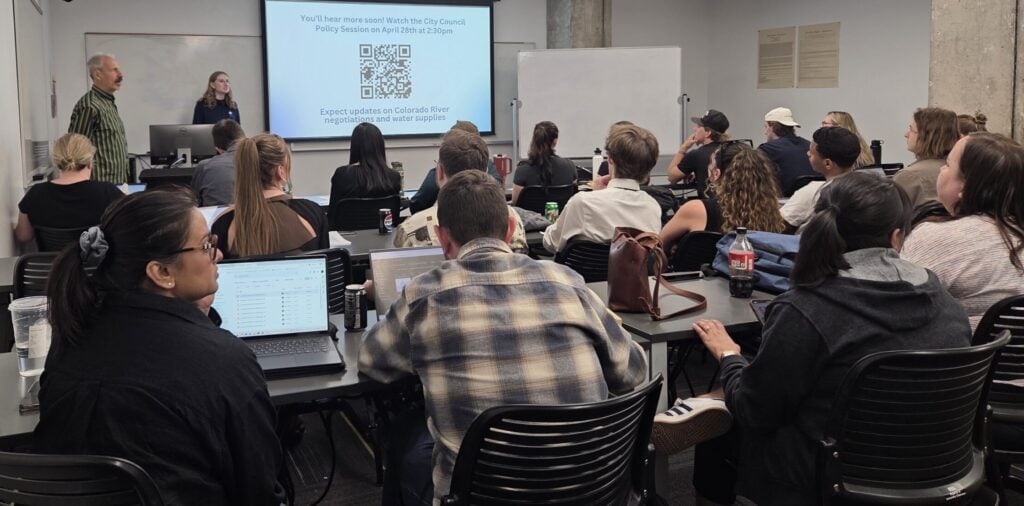
To better understand how drought and water conservation messages resonate with different audiences, the City of Phoenix Water Services Department partnered with graduate students from Arizona State University’s Watts College of Public Service and Community Solutions. This took place during the spring 2026 semester.
The five graduate students, specializing in public policy and public administration, explored communication strategies that could support community understanding of drought, conservation and long-term water sustainability. Their work combined academic research with practical applications. Therefore, it may help inform future outreach efforts.
Learning from Communities Near and Far
The students began by examining how drought-prone communities around the world communicate about water challenges. They reviewed public education campaigns, community engagement efforts and strategies designed to encourage water-saving behaviors. Moreover, they learned from recent public health and wildfire educational campaigns.
The team also analyzed insights from Water – Use It Wisely’s statewide perception research, including focus groups and a survey of more than 1,000 Arizona residents, to better understand how people receive and respond to water-related information.
One of the clearest findings was that people value communication that is specific, useful and relevant to their daily lives. While some residents prefer detailed information and data, others are more likely to engage with practical tips, visual content or interactive tools. Regardless of format, people consistently expressed a preference for straightforward information from trusted sources.
Connecting Conservation to Everyday Benefits
One of the strongest findings from the research was the role that financial considerations play in motivating saving water.
The students found that messages focused on affordability and cost savings were more likely to inspire behavioral change than messages centered solely on ethics or personal responsibility. In other words, residents were more likely to take action when they understood how efficient water use could help lower utility bills. Additionally, efficient use could also reduce unnecessary waste or save money over time.
This does not mean people are unconcerned about Arizona’s water future. Rather, it suggests that conservation messages can be more effective when they connect broad community goals with practical benefits. These are benefits that residents can see in their everyday lives.
For water providers and conservation programs, that insight reinforces the importance of pairing information about drought and sustainability with clear, actionable steps that help residents save both water and money.
Testing Different Communication Approaches
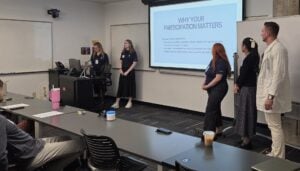
As part of the project, the students facilitated an exploratory workshop with more than 50 ASU students. Participants engaged with different communication styles and provided feedback on what they found most effective.
One important takeaway was the value of two-way communication. Participants responded positively when they had opportunities to ask questions, share perspectives and participate in discussion rather than simply receive information.
The workshop also reinforced the importance of transparency. Participants preferred messages that clearly explained challenges and solutions, provided context and offered practical steps to empower individual actions.
Because the workshop involved ASU students and was designed as an informal research exercise, the results should not be viewed as representative of all Phoenix residents or even all Arizona residents. However, the project offered useful insights into how different audiences process information. It also showed what types of approaches may create greater engagement or inspire action.
Turning Research into Better Outreach
For Phoenix Water staff, the capstone project provided an opportunity to explore new perspectives and test ideas that may strengthen future outreach efforts. For the students, it offered hands-on experience. They were able to apply research and public engagement principles to a real-world challenge in their home city.
Most importantly, the project reinforced a simple but valuable lesson: effective water communication starts with understanding people.
By continuing to listen, learn and collaborate, organizations like Phoenix Water and Water – Use It Wisely can help residents make informed decisions that support both their households and Arizona’s long-term water future.
Every Action Makes a Difference
Water conservation is a shared effort, and every action matters.
Checking for leaks, optimizing irrigation schedules, choosing desert-adapted plants and learning more about opportunities for conserving are all practical ways residents can reduce waste. In addition, these actions also support a future for Arizona.
Lara Van Lith is a Water Resource Specialist at the City of Phoenix, one of 23 Water – Use It Wisely partners dedicated to offering water-saving advice and programs. Her work focuses on providing actionable, water conservation solutions and educational tools for Phoenix residents. She loves to paint and thrift, and her favorite desert plant is the Snapdragon Vine!