


Featured Plant of the Month – Palo Blanco
When searching for plants that work well in an arid climate, it can sometimes be hard to find a hardy plant that has the right “feel.” Our desert plants can be full of stout, sharp edges and lines, and some designers or landscapers have a hard time finding ways to soften the look while staying true to the hardy desert adapted requirement for a low maintenance and low water landscape.
Enter the Palo Blanco, Mariosousa willardiana (Previously classified as Acacia willardiana), a Sonoran Desert native that offers a completely different look and feel from many of the typical desert trees.
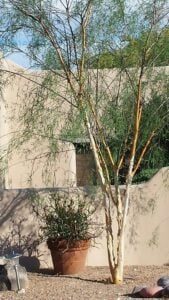
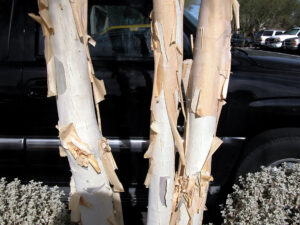
The Palo Blanco has a whimsical feel to it. With its upright, willowy form and long, narrow leaves that dance in the breeze, it brings a sense of movement and softness to the landscape. Its unique white, peeling bark adds even more curiosity and attention to this dainty tree.
Size and Flowering
The Palo Blanco is small to moderate in size, growing 15-25 feet tall and only 10-15 ft wide. It looks fantastic on its own or when planted in groups of three. This size and its thornless nature make it a great fit for small yards, narrow areas, courtyards, and patios. The tree has a light airy texture to the canopy, providing a wispy shade that allows for plants to do well underneath if they need a little shade in our summers.
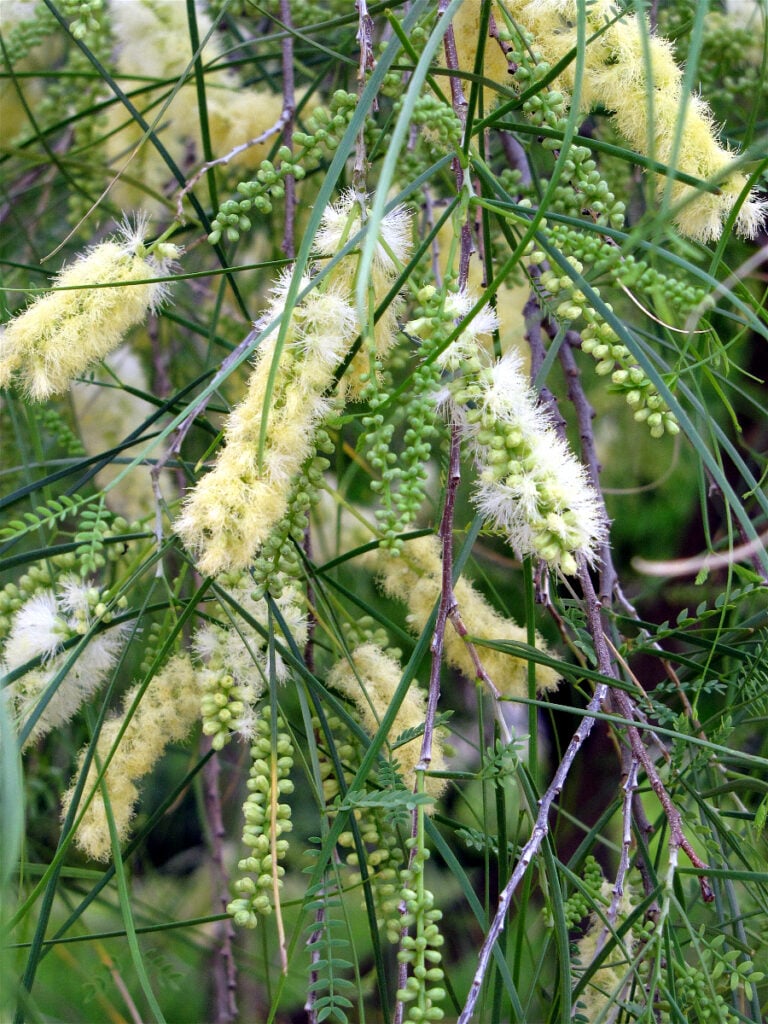
In the spring it will produce creamy white puffy flowers that turn into seed pods in the summer, like most of our desert trees in the legume family. The trees are deciduous, allowing more light to your landscape in the winter and then the pop of green and shade in the summer. Their graceful willowy (and papery) structure adds a neat design element to any landscape providing that softness and whimsical element. When backlit at night you can really highlight the shape and white to grey peeling bark of the tree.
Palo Blancos are loved by native pollinators, and the peeling barks is often used by hummingbirds for nesting.
Easy Care
The Palo Blanco is a slow growing, low maintenance tree and does not take well to, nor do they need, pruning once established in the landscape. They do like full sun and well drained soils, so placing them away from grass and other dense trees is best. This tree is delicately branched, so correct staking in the first growing season is recommended as it establishes. They are loved by native pollinators, and the peeling barks is often used by hummingbirds for nesting.
Why We Love It
The Palo Blanco is a whimsical eye-catching small tree that adds a distinct texture and softness to the landscape. This tree is not for those needing dense shade, but excels in tight spots needing a higher tier of greenery and form, that is temperature hardy and low maintenance. It is deciduous, so it may not be best planted near a pool. As with all trees in central Arizona, the best time to plant is in the fall. This allows ample time for the roots to establish before the heat of summer. Water deeply but infrequently during establishment—once established, Palo Blanco is highly drought-tolerant.
As the saying goes: The best time to plant a tree was 20 years ago. The second best time is now!
Arbor Day is April 24th!
Arbor Day is the perfect time to show some love to the trees in your landscape and community. Trees play a vital role in cooling our environment, supporting wildlife, and helping conserve water when thoughtfully selected and placed.
Here in Arizona, choosing desert-adapted, water-thrifty trees is key. Explore our favorite tree options and, when you’re ready to plant, follow our Planting Trees and Shrubs guidelines to set your landscape up for success.
Victoria Caster is a Sustainability and Water Conservation Coordinator with the City of Peoria, AZ, one of 23 Water– Use It Wisely partners to offer water-saving advice and programs. Victoria is a Master Gardener and overall nature aficionado. Being an Arizona native, she sees the shift and need locally to educate and help people embrace our unique desert.