

This month’s Plant of the Month blog spotlights another standout selection from his latest book — Cool Cacti and Succulents for Hot Gardens by Greg Starr — a must-have guide for any desert gardener! With over 150 water-wise picks perfect for the Southwest, it’s no surprise we’re big fans here at Water – Use It Wisely. One of our favorite features? Greg’s playful deep dives into the etymology (the origin of each plant’s scientific name) and his fascinating field notes (he somehow kept track of) from observing these plants in their natural habitats. Who knew botany could be this entertaining?
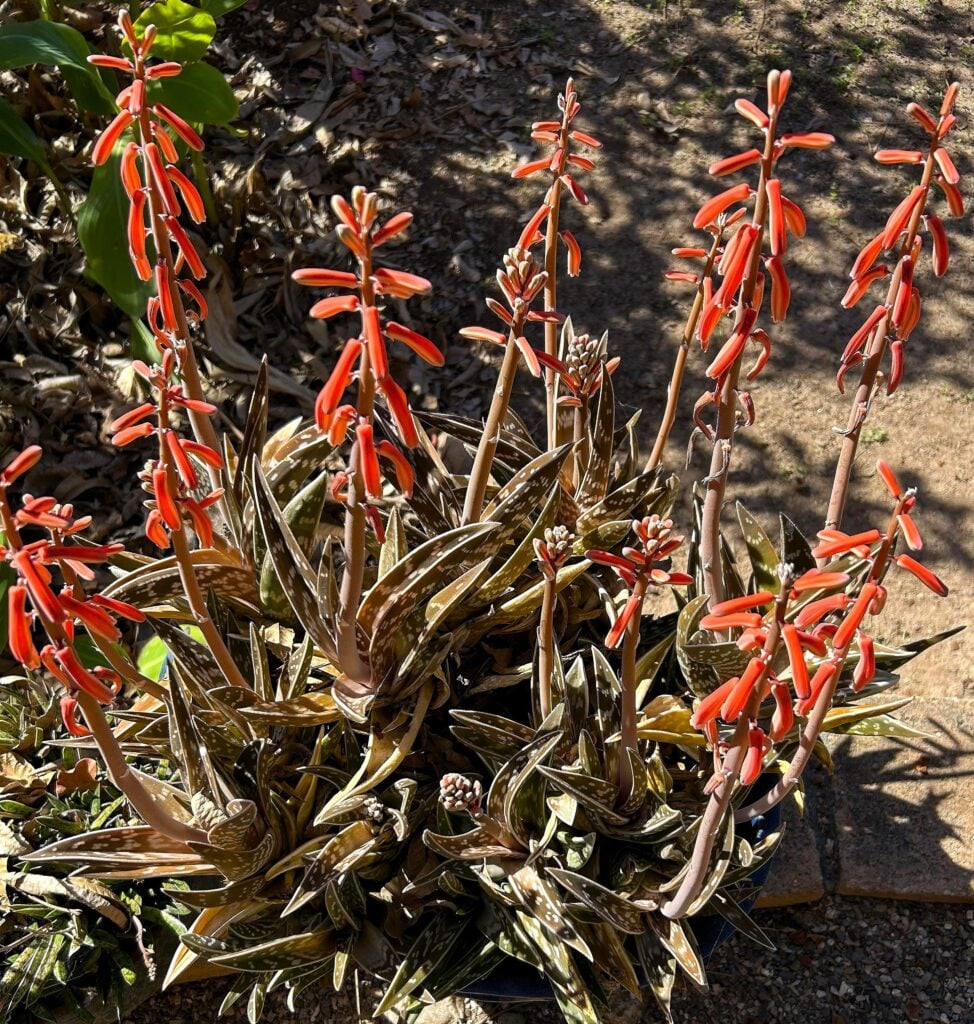
Partridge-Breast Aloe or Tiger Aloe, Aloe variegata (newly classified as Gonialoe variegata)
SUCCULENT ROSETTE
AT-A-GLANCE
Attracts hummingbirds, bees.
|
Etymology
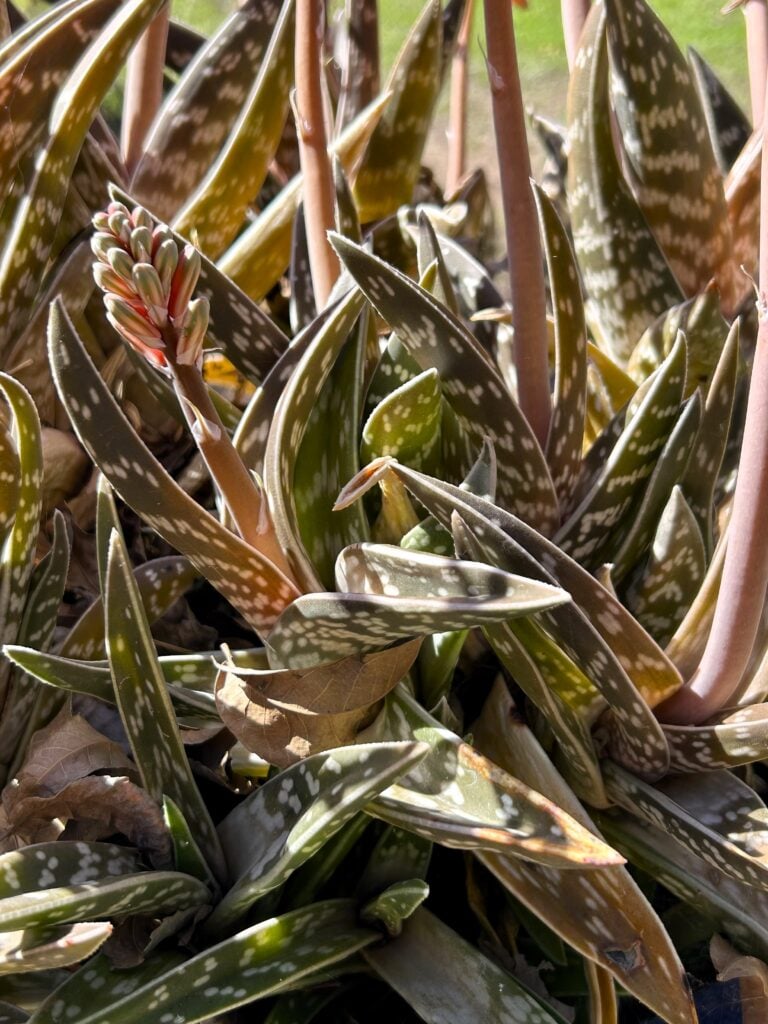
Carl Linnaeus used the Latin variegat– to describe the white marked leaves.
Field Notes
In September 2002, I was with a group of plant nerds being shown around South Africa by the late couple, Rod and Rachel of Silverhill Seeds. One of our target plants was Aloe variegata, which we did find buried in shrubbery. More recently, Carol and I were in South Africa with our friends Thomas Staudt and Maria Voris looking at plants, birds, reptiles, and rocks, and we came across blooming plants of Aloe variegata out in the open. Aloe variegata is widespread in the western part of South Africa and occurs from about 600-2,000 feet elevation.
Description
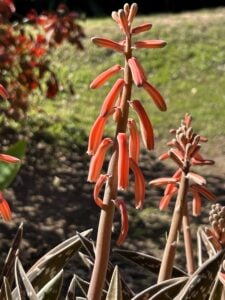
These are small plants with one or more leaf clusters, each one grows to about 6-12 inches tall and 6-8 inches across. Clusters can get as big as 20-24 inches across. Each rosette consists of several thickly succulent, deeply folded, tiger-striped, triangular leaves stacked in three vertical columns. Deep pinkish-red to orange-red, nearly 2-inch-long flowers appear on 10-15-inch tall stalks in late winter and early spring, and will draw in hummingbirds.
Culture
These are hardy to about 20° F and can be left unprotected in winter in USDA zones 9a-11. Plants can tolerate full sun in cities with summer temperatures topping out in the high 80’s or low 90’s F, but they should be grown in some shade in cities where temperatures routinely climb above 100° F for much of the summer. Although drought tolerant, the plants will respond to receiving supplemental water on a weekly basis from spring until fall. They prefer to be in soil with excellent drainage to keep excess moisture away from the roots.
Identification
With their deeply folded and keeled, three-ranked, triangular leaves, Aloe variegata are very distinctive plants.
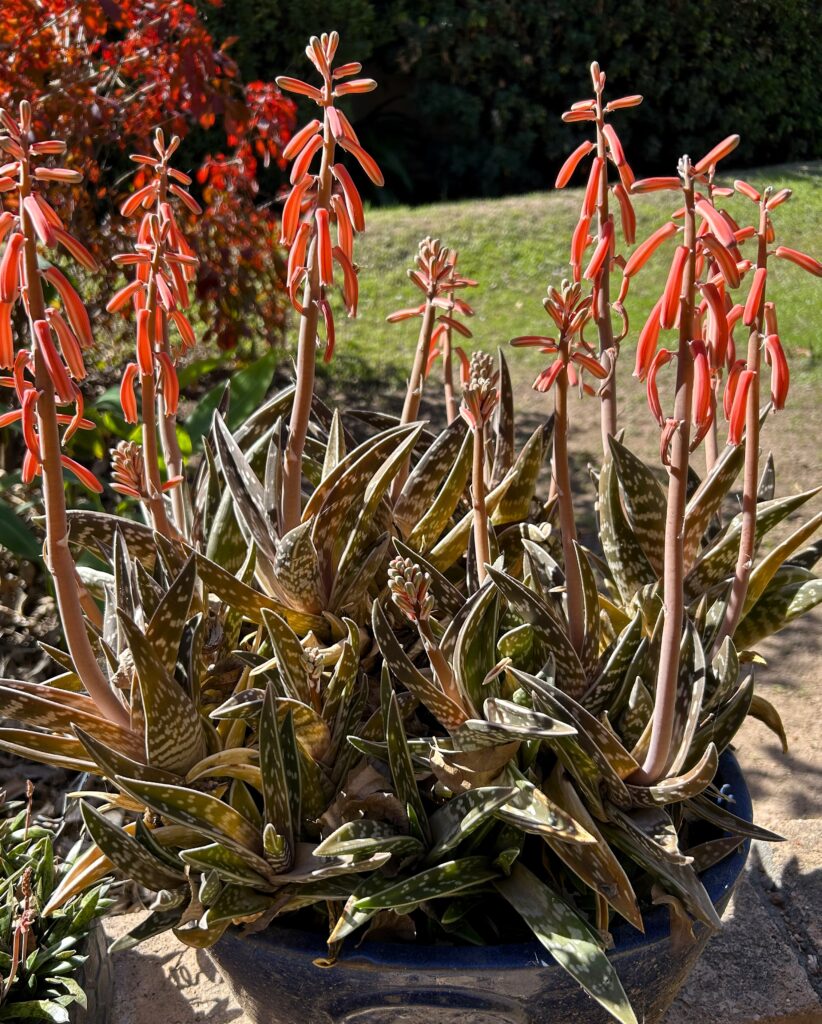
“Aloe variegata plants are ideal for growing in decorative containers and fit in with other succulents and cacti in a collection.”
Landscape Application
These small plants are best used in a small residential landscape along with other Aloe species, small cacti, and flowering perennial plants. Use Aloe karasbergensis and Aloe striata, Ariocarpus species, Astrophytum species, Coryphantha species, and Echinocereus species in a succulent garden. Plant perennial and small shrubs such as Conoclinium dissectum, Dalea capitata, Euphorbia rigida, Salvia greggii, Tetraneuris acaulis, and Zinnia acerosa to help cool the soil and provide seasonal color. Aloe variegata plants are ideal for growing in decorative containers and fit in with other succulents and cacti in a collection.
Precautions
Plants in the ground might be taste tested by packrats and rabbits, while those in pots should be kept in a spot that packrats cannot access.
~ ~ ~ ~ ~ ~ ~ ~ ~ ~ ~ ~ ~ ~ ~ ~ ~ ~ ~ ~ ~ ~ ~ ~ ~
Did you know that up to 70 percent of water use is outdoors? That’s why we love desert plants and feature them each month. It’s still a great time to plant penstemons and other plants. Learn more on our Arizona Low-Water-Use Plants page. Visit our page on Choosing and Planting Low Water-Use Plants for tips on plant selection and how to plant properly. Also, be sure to read through all of our featured Plant of the Month blogs!
You may also enjoy: Plant of the Month: Penstemon where you can learn about other varieties and colors available.
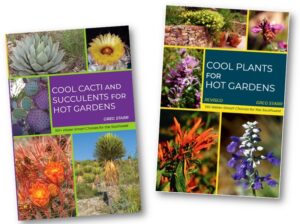 Water – Use It Wisely is proud to feature guest bloggers who write about topics related to water and water conservation. Greg Starr is a horticulturist and the owner/manager of Starr Nursery located in Tucson, AZ. It is a mail order nursery where you can shop online. Greg has traveled extensively in Mexico and the southwestern United States to study native plants for their potential landscape use in desert regions of the world. In 2009, Greg entered the world of literature as an author with the publication Cool Plants for Hot Gardens. This book is now revised in its second edition publishing in December of 2021. His latest book, Cool Cacti and Succulents for Hot Gardens published in October 2024. Both books are available online.
Photos by Steve Priebe.