

This month, our plant of the month blog features a plant description from a recently revised book, Cool Plants for Hot Gardens by Greg Starr! In his book, Greg features 150 water-smart choices for the Southwest – it’s no wonder why we like the book so much here at Water – Use It Wisely! He includes a fun category of the “Etymology” or the origin of the scientific name, as well as “Field Notes” he has taken (and somehow kept track of) that describe where he found or has observed the plants growing in habitat.
Turpentine Bush, Ericameria laricifolia
AT-A-GLANCE
Attracts bees, butterflies.
|
Etymology
The species name is derived from the resemblance of the foliage to that of plants in the genus Larix, a conifer of Canada and Siberia.
Field Notes
In 2018, I drove along the Middlemarch Pass Road to get to the Dragoon Mountains of southeastern Arizona after a good summer monsoon season and saw a hillside full of these gorgeous shrubs. Plants are found from southern California to western Texas and south into neighboring Sonora and Chihuahua, growing between 2,500-7,200 feet elevation.
Description
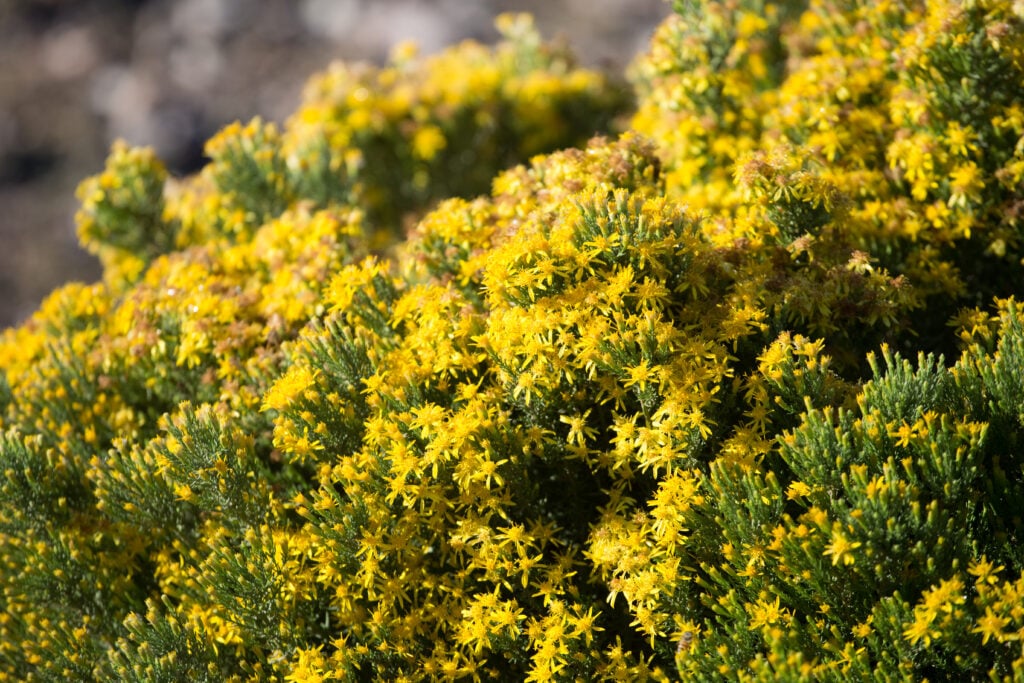
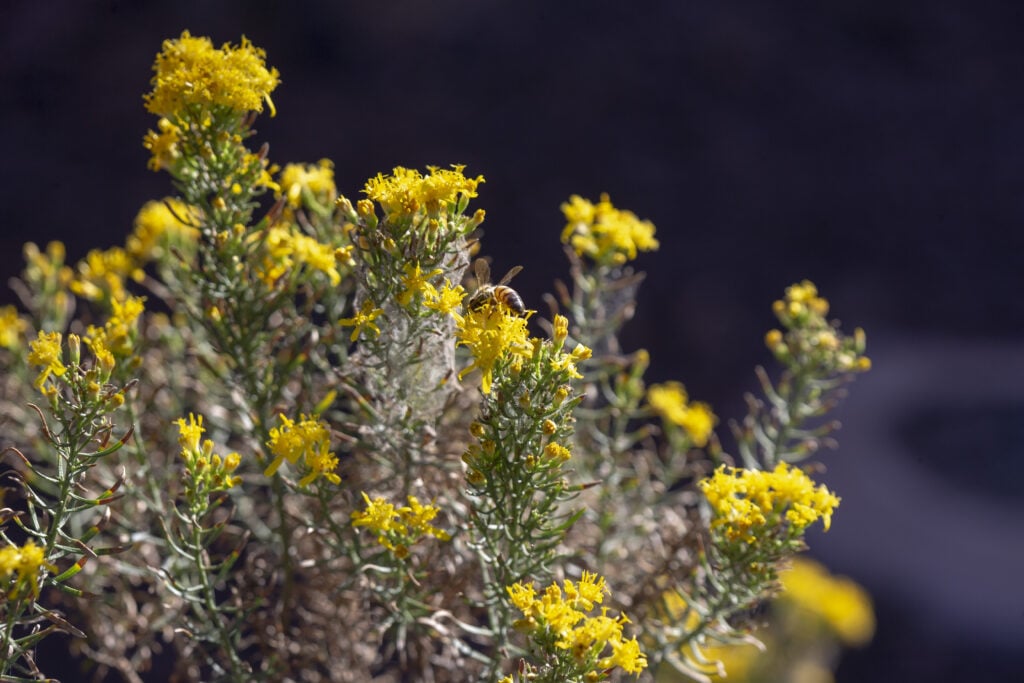
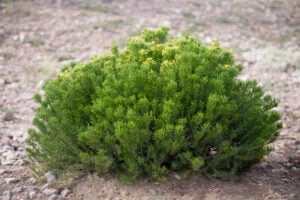
These seasonally colorful shrubs usually grow 2-3 feet tall by 3-4 feet across with reports of plants reaching 3-4 feet tall and as much as 6 feet across. Although those dimensions could be the result of extraordinary conditions, it is always a good idea to keep the extreme cases in mind when rationing out space in your landscape. The dark-green, aromatic, needle-like leaves are about ½-inch-long and remain on the plant through the winter. The dark-green color provides a nice background to the clusters of bright yellow, butterfly-attracting daisy-like flowers that appear from September through November. Light brown seeds favored by some birds follow the flowers.
Culture
Given the wide elevational range, plant hardiness has the potential to vary quite a bit. Plants have reportedly tolerated temperatures to 5° F and are confirmed hardy in USDA zones 6b-11. To keep them tight and dense, place these in full sun and in a soil that has very good drainage. The growth rate is moderately fast when plants are young and will vary with amount of water applied once they are established. In general, give them a periodic thorough soaking when the temperatures begin to heat up, enough to get them to the summer monsoon season, but not so much that they become leggy. They will tolerate some pruning if pants become leggy but are generally carefree. Let the seed develop after flowering to give seed eating birds a feast.
Identification
Ericameria Laricifolia starts blooming in late summer whereas the similar looking Chrysactinia mexicana starts blooming in spring.
Landscape Application
Use these low-growing colorful shrubs in any southwestern xeriscape for the late summer butterfly-attracting flowers. They are effective when planted singly or mass planted with groupings of large accent plants such as Agave ovatifolia, Dasylirion acrotrichum, Fouquieria splendens, and tall Yucca species. Turpentine Bush plants also blend nicely with native grasses and spring flowering perennials and shrubs. Calliandra eriophylla, Dalea pulchra, Eremophila hygrophana, and Penstemon eatonii are all tough plants that are compatible with Ericameria laricifolia.
Precautions
Young plants of Ericameria laricifolia should be screened from the ravages of rabbits until they become established.
~ ~ ~ ~ ~ ~ ~ ~ ~ ~ ~ ~ ~ ~ ~ ~ ~ ~ ~ ~ ~ ~ ~ ~ ~
Did you know that up to 70 percent of water use is outdoors? That’s why we love desert plants and feature them each month. It’s still a great time to plant non-tropical plants in your landscape, and you can learn more about Turpentine Bush and other plants on our Arizona Low-Water-Use Plants page. Visit our page on Choosing and Planting Low Water-Use Plants for tips on plant selection and how to plant properly. Also, be sure to read through all of our featured Plant of the Month blogs!
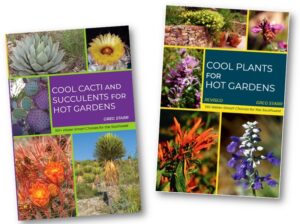 Water – Use It Wisely is proud to feature guest bloggers who write about topics related to water and water conservation. Greg Starr is a horticulturist and the owner/manager of Starr Nursery located in Tucson, AZ. It is a mail order nursery where you can shop online. Greg has traveled extensively in Mexico and the southwestern United States to study native plants for their potential landscape use in desert regions of the world. In 2009, Greg entered the world of literature as an author with the publication Cool Plants for Hot Gardens. The revised second edition of this book came out in December 2021. His latest book, Cool Cacti and Succulents for Hot Gardens published in October 2024. Both books are available online.