

Stop wasting time/money by over-pruning your shrubs!
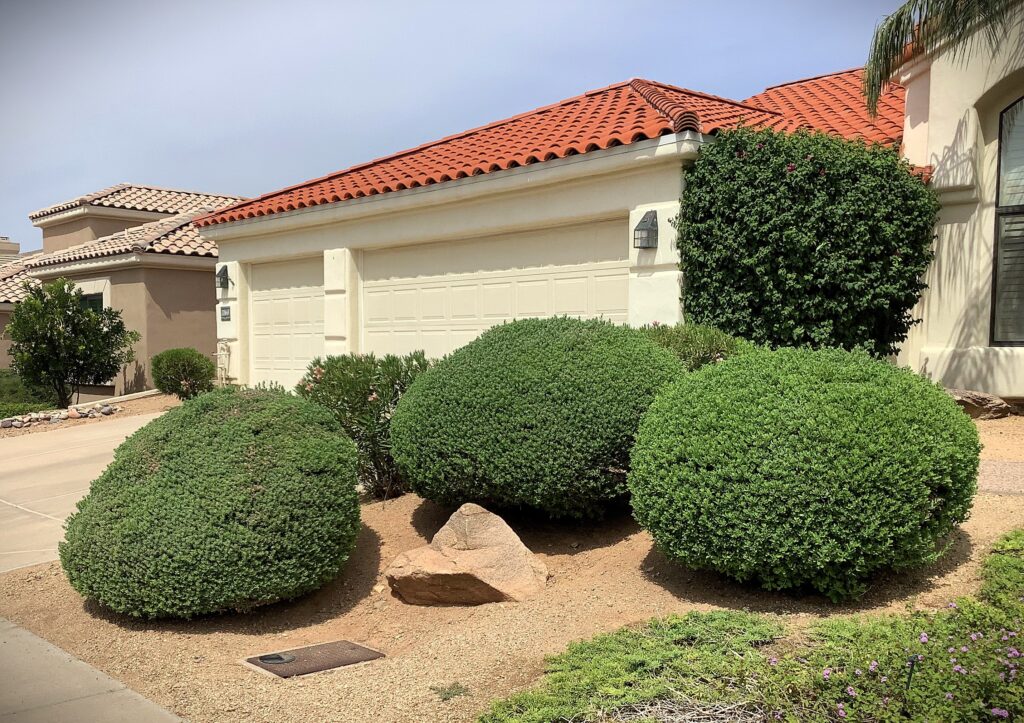
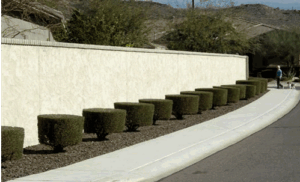
Have you ever driven by a landscape with shrubs that have been pruned or sheared into rounded shapes? You may be surprised to find out that maintaining shrubs this way is often not only unnecessary but uses more water than shrubs pruned infrequently.
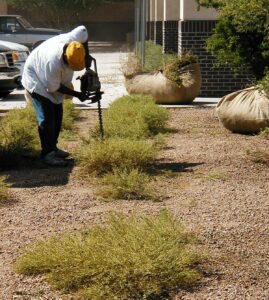
What are some ill effects of excessive pruning?
- Plants grow faster in their attempt to re-grow the leaves that were pruned away.
- More maintenance is required due to the fact that shrubs grow faster.
- More water is used, as the plant devotes resources to replacing leaves lost to pruning.
- Flowering shrubs are downgraded to round, green shapes with few leaves and flowers.
- Excessive and unnecessary green waste is created.
- Shrubs decline due to the stress of constantly growing back leaves lost to pruning.
So, what can you do to avoid the need to frequently prune your shrubs?
1. Learn how large your shrubs will become and allow enough room for them to grow. For example, if your chosen shrub(s) grow to 6 ft. tall and wide, then plant them at least 7 feet apart and in an area where they won’t impede your view. You can find a list of shrubs and their mature sizes in the Landscape Plants for the Arizona Desert online plant database.
2. Reduce the number of excess shrubs in the landscape. If your landscape cannot fit all of the plants in it without having to resort to frequent pruning, you can selectively remove some of the shrubs in order to allow those that remain to grow larger without having to constantly prune them.
3. Prune flowering shrubs once a year or less. It may surprise you to learn that shrubs do not need to be pruned on a regular basis. As long as your shrub(s) have enough room to grow – proper pruning will be focused on plant health and removing old, woody growth (most flowering shrubs can be pruned back in early spring). Throw away your hedge-trimmers and use hand pruners or loppers. Find helpful guidelines on how to prune and maintain flowering shrubs through this shrub guide from the University of Arizona Cooperative Extension.
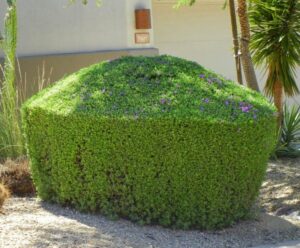
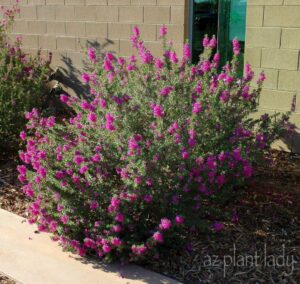
And what should you do if you already own over-sheared shrubs?
If your landscape is filled with overgrown, formally pruned shrubs – you can start over. In early spring you can severely prune back flowering shrubs to 18 inches. This type of severe pruning rejuvenates shrubs and stimulates new growth. You can then allow them to grow back into the natural, attractive shape of the flowering shrub. You may lose a few of your shrubs doing this, but the results are well worth the risk.
By avoiding the practice of excessive pruning, you will not only save water, money and time – you’ll have an attractive landscape with beautiful, naturally-shaped, flowering shrubs instead of a landscape filled with boring, green ‘balls’.

New Shrub Pruning Booklet Helps You Say “No” to Ball, Square, & Cupcake-shaped Shrubs!
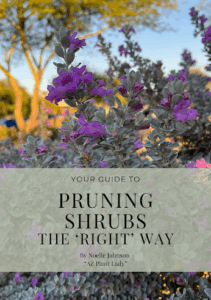
Ready to learn more about properly pruning your shrubs?
If you are ready to say “goodbye” to boring shrubs and “hello” to a landscape filled with beauty, color, and texture with less time and work, my resource guide, “Pruning Shrubs the ‘Right’ Way,” will help you! Available as a spiral-bound booklet or digital download, this handy guide provides everything you need to approach pruning with confidence. Use the guide whether you do it yourself or instruct your landscaper how you want it done.
Pruning Shrubs the ‘Right’ Way is an invaluable resource that clearly explains what you need to know to maintain your shrubs correctly.
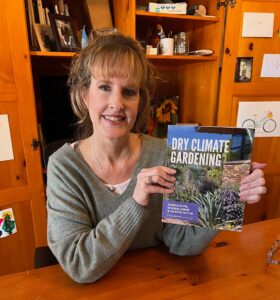 Water – Use It Wisely is proud to feature guest bloggers who write about topics related to water and water conservation. The author of this blog, Noelle Johnson, is an urban horticulturist, Certified Arborist and freelance garden-writer who helps people create beautiful, low-maintenance gardens through helpful advice on her blog www.azplantlady.com.
She is passionate about teaching people that flowering shrubs aren’t meant to be balls, cupcakes or square-shaped. When she is not writing or helping other people with their landscapes, you can find her “playing” outside growing fruits and vegetables, and planting flowering shrubs and maybe a cactus or two. She has also recently authored two book, Dry Climate Gardening: Growing Beautiful, Sustainable Gardens in Low Water Conditions and The Water-Smart Garden: Techniques and Strategies for Conserving, Capturing, and Efficiently Using Water in Today’s Climate… and Tomorrow’s. Learn about both books on her website.
Water – Use It Wisely is proud to feature guest bloggers who write about topics related to water and water conservation. The author of this blog, Noelle Johnson, is an urban horticulturist, Certified Arborist and freelance garden-writer who helps people create beautiful, low-maintenance gardens through helpful advice on her blog www.azplantlady.com.
She is passionate about teaching people that flowering shrubs aren’t meant to be balls, cupcakes or square-shaped. When she is not writing or helping other people with their landscapes, you can find her “playing” outside growing fruits and vegetables, and planting flowering shrubs and maybe a cactus or two. She has also recently authored two book, Dry Climate Gardening: Growing Beautiful, Sustainable Gardens in Low Water Conditions and The Water-Smart Garden: Techniques and Strategies for Conserving, Capturing, and Efficiently Using Water in Today’s Climate… and Tomorrow’s. Learn about both books on her website.