

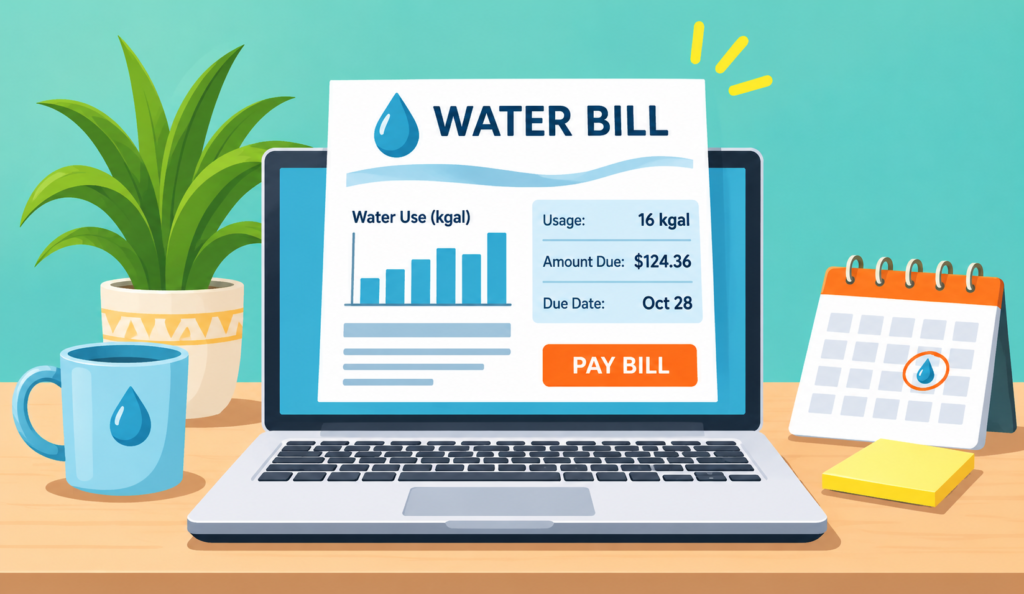
Water rates, usage tiers and mysterious charges? Let’s break down the numbers—and find opportunities to save.
When was the last time you really looked at your water bill? Not just the amount due, but the numbers behind it?
With water rates increasing in many Arizona communities, it’s a good time to take a closer look. Your water bill can tell you a lot about your household’s water habits, reveal opportunities to save, and even alert you to potential leaks.
The tricky part? Not all water bills look alike! Depending on where you live, the way water is measured, priced, and billed can be quite different.
And we’ll be the first to admit… water bills can be, well, complicated!
Let’s break down the numbers worth knowing.
First, Know Your Units!
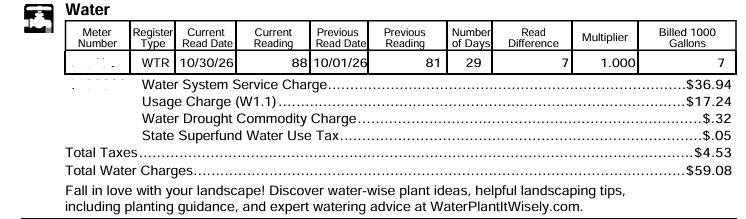
Before you can understand how much water you’re using, you need to know how your utility measures it.
Most Arizona communities use kgal (thousands of gallons) to report water consumption.
1 kgal = 1,000 gallons
So, if your bill shows 12 kgal of water use, your household used 12,000 gallons that billing period.
Phoenix uses a different measurement called CCF (also known as HCF), which stands for 100 cubic feet of water.
1 CCF = approximately 748 gallons
That means 12 CCF equals approximately 8,976 gallons.
And remember, your bill likely reflects water used both inside your home and outdoors in your landscape. It is rare for residential properties to have a separate landscape meter.
Water-wise tip: Check the number of days in your billing period. A longer billing cycle can mean a higher bill, even if your daily water use hasn’t changed.
Why Did My Water Bill Go Up?
A higher water bill doesn’t always mean you’re using more water. The first step is figuring out whether your water use increased, your rates changed, or both.
If your water use increased:
- Seasonal watering: Hotter weather and increased landscape irrigation can drive up consumption.
- Changes at home: Houseguests, filling a pool or other activities may mean using more water.
- Hidden leaks: A running toilet or broken irrigation line can waste thousands of gallons without attracting much attention.
If your water use stayed the same:
- Rate increases: Your water provider may have adjusted its rates.
- Changes in fees: Base charges or other utility fees may have increased.
-
Drought surcharges: With ongoing shortages on the Colorado River and rising costs to secure water supplies, some Arizona water providers have introduced drought surcharges or other fees to help cover these costs and encourage conservation.
One more thing to check: The number of days in your billing period. A longer billing cycle can mean more water used and a higher bill, even if your average daily consumption hasn’t changed.
Water-wise tip: Compare the gallons used on your current bill with the same month last year. If consumption is similar but your bill is higher, take a closer look at rates and fees.
What’s a Water Rate Tier?
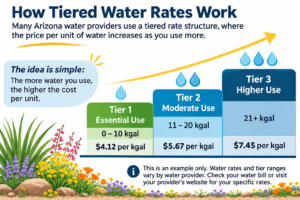
Some utilities charge the same price for every unit of water used. Others use a tiered rate structure, where the price per unit increases as water consumption moves into higher tiers.
Think of it as a staircase. As you use more water, additional units may become more expensive. The goal is to encourage conservation by rewarding efficient water use and providing a financial incentive to avoid excessive consumption.
Other providers use seasonal rates or water budgets that account for factors such as household or property size.
Water-wise tip: Find out how your utility calculates water charges. If you’re on a tiered rate structure, reducing unnecessary water use may help you avoid more expensive tiers.
What Are All Those Other Charges?
Your bill may include more than the water you actually use.
Many utilities have a base charge that helps pay for the infrastructure and services needed to deliver safe, reliable water. That includes treatment facilities, pipes, pumps, storage tanks, maintenance and more.
Then there’s the usage charge, which reflects how much water you consume.
Depending on your provider, you may also see charges for wastewater, solid waste, stormwater, or other services.
That’s why reducing water use may lower part of your bill without eliminating fixed charges.
Water-wise tip: Not sure what a fee means? Check your water provider’s website for a rate schedule or explanation of charges.
Your Water Bill Can Tell a Story
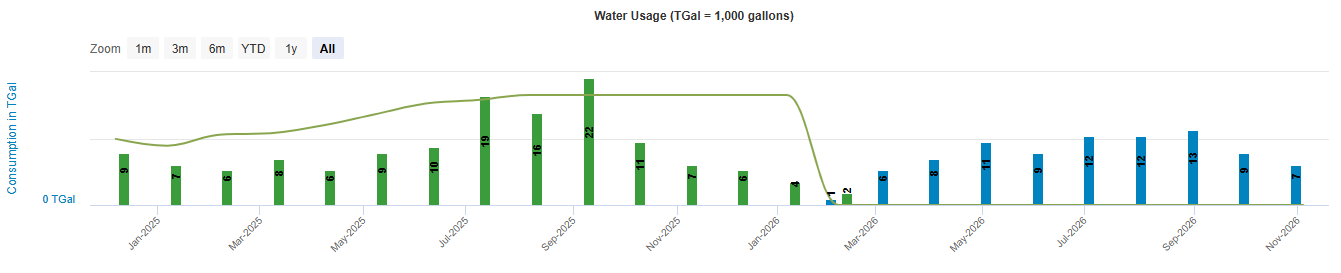
If your bill includes a graph showing monthly or historical water use, take a closer look.
In Arizona, it’s normal for landscape water use to increase during our hot, dry summers and decrease substantially during cooler months.
But what if your winter water use looks unusually high? Or your consumption suddenly jumps even though your habits haven’t changed?
Your bill may be telling you it’s time to investigate.
A leaking toilet, stuck irrigation valve, or underground leak could be the culprit.
And here’s something else to consider: If you’ve signed up for automatic bill payments, are you still checking your water use? It’s easy to overlook gradual increases when you aren’t reviewing your bills regularly.
“If you’ve signed up for automatic bill payments,
are you still checking your water use?”
Water-wise tip: Compare your usage with the same month last year. It’s often a more meaningful comparison than looking only at the previous month.
Are You Using the Right Amount of Water?

Here’s where things get interesting!
Knowing how much water you use is important. But how do you know whether it’s the right amount for your household?
A family of two in a small home with desert landscaping will likely have very different water needs than a family of five with a swimming pool, lawn, and large landscape.
That’s where household water-use calculators come in.
These free online tools estimate how much water your household might reasonably need based on factors such as the number of people in your home, your landscape and our Arizona climate.
Then you can compare that estimate with the actual water use shown on your bill.
Could you be using more water than you need?
Several Water – Use It Wisely partners offer helpful tools:
- Gilbert Household Water Use Calculator
- Mesa Know Your H2O Water Calculator
- Queen Creek Residential Water Use Calculator
- Tucson Home Water-Works Calculator
- AMWUA Water Use Calculator — another option for Valley residents
These tools can help you identify opportunities to use water more efficiently, especially outdoors, where irrigation can account for a substantial portion of household water use in our desert climate.
Turn Those Numbers Into Savings!

Once you understand your water bill and how your consumption compares with estimated needs, you can start putting that knowledge to work.
Outdoors: Adjust irrigation schedules seasonally, check for leaks and make sure your landscape is getting the right amount of water—not too much.
Indoors: Fix dripping faucets and running toilets, and consider WaterSense-labeled fixtures when it’s time for replacements.
Check for rebates: Your water provider may offer incentives for water-efficient landscaping, irrigation improvements or other conservation measures.
And don’t forget to check your water bill or utility website for conservation tips, programs and workshops.
Your Next Water-Saving Challenge
Grab your latest water bill and see if you can answer these questions:
- How many gallons of water did your household use?
- Is that more or less than the same month last year?
- How much of your bill is based on water consumption?
- Does your provider use tiered or seasonal rates?
- How does your actual water use compare with a household water-use calculator’s estimate?
- Can you identify one way to reduce your water use next month?
The bottom line? You can’t control every charge on your water bill, but understanding the numbers—and knowing how your water use compares—can help you make smarter decisions about the water you use.
Want to Dig Deeper?
Explore the EPA WaterSense guide, Understanding Your Water Bill, for more information about water use, rate structures and utility charges.
Then visit our Water – Use It Wisely pages for practical ways to save water inside and outside your home.
You can also learn more in these blogs:
- Your Water. Your Impact. Know, Compare, and Save
-
One Tower, Many Stops: The Water – Use It Wisely Water Tower Tour
Donna DiFrancesco is a horticulturist and Conservation Coordinator with the City of Mesa, AZ, one of 23 Water– Use It Wisely partners to offer water-saving advice and programs.