

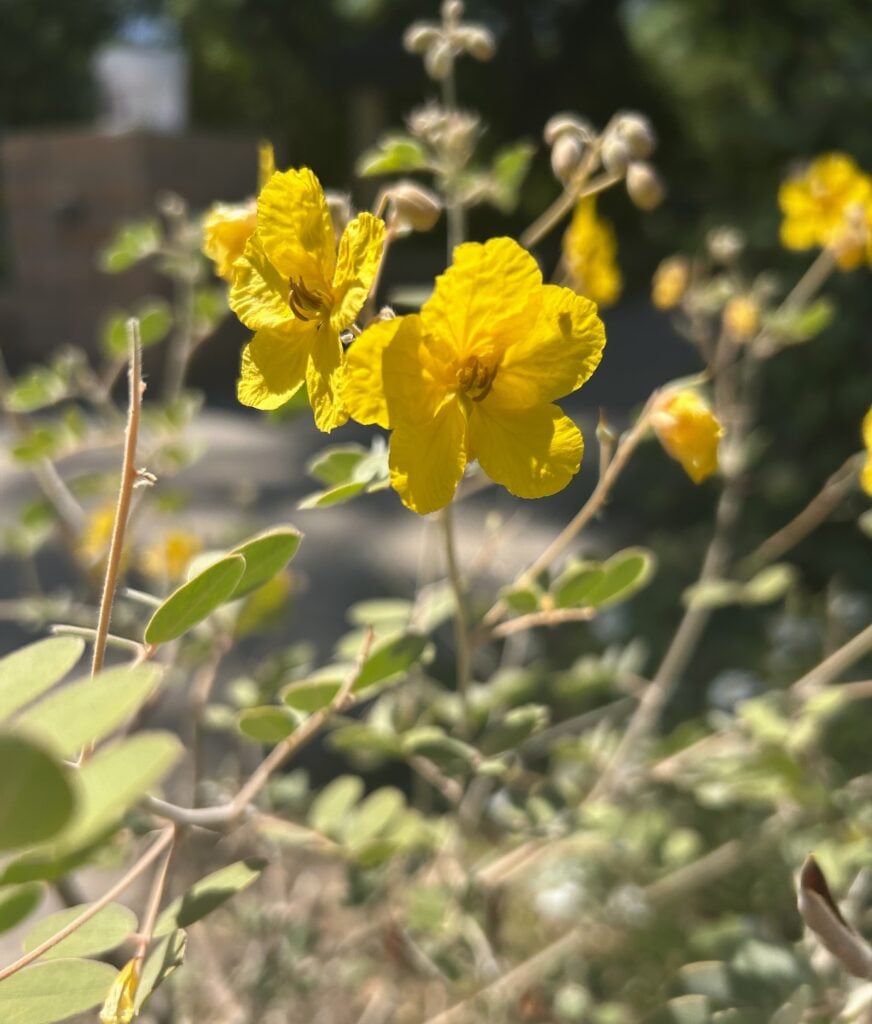
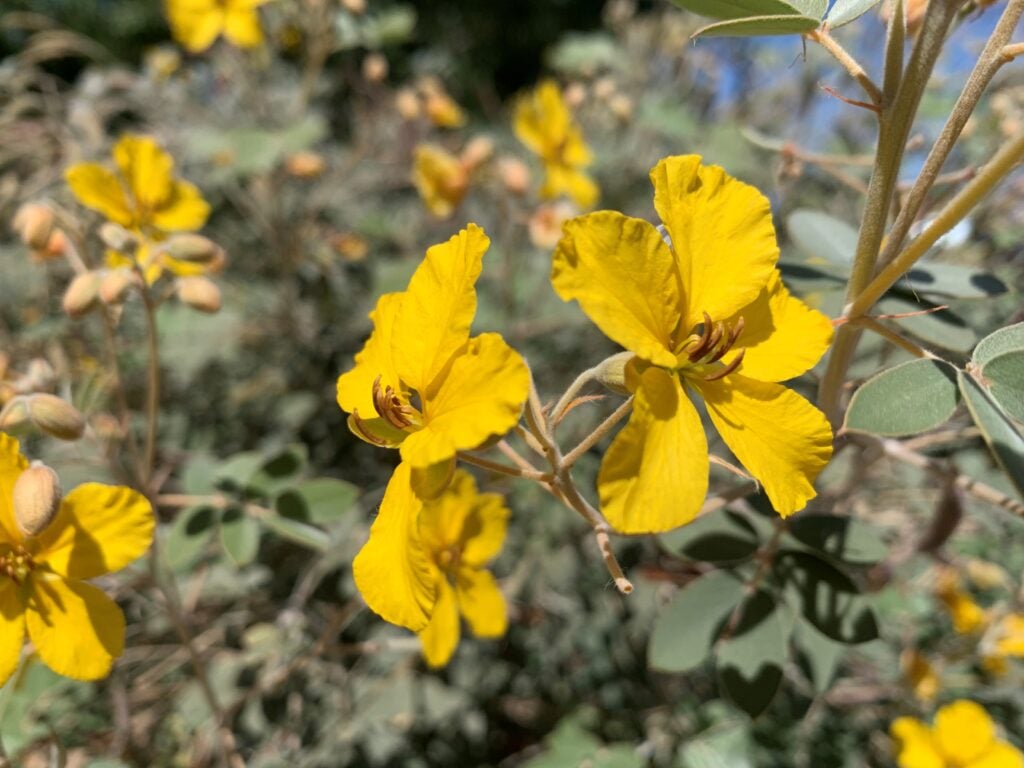
Desert Senna (Senna covesii) is a wonderful addition to a pollinator-friendly yard. This plant yields an abundance of flowers and seeds, which attract birds, bees and butterflies. A desert dweller, it thrives in full sun and requires minimal water. You may hear Desert Senna before you see it because the seeds rattle inside the pods, especially when the wind blows or wildlife passes by.
Description
Native to the southwestern US and northwest Mexico, Desert Senna is a subshrub, meaning it has woody stems with upper branches that are herbaceous, or non-woody. This perennial grows to about 2 feet high and 2 feet wide. Its leaves are covered with very fine gray hairs – a desert adaptation that helps the plant reflect sunlight and reduce wind to conserve water. Extending at the end of the branches are five-petaled yellow flowers that bloom from spring to fall. Desert Senna gets the nickname “rattlebox” because the dry seeds detach and rattle freely inside the papery seedpods.
Desert Senna gets the nickname “rattlebox” because the dry seeds detach and rattle freely inside the papery seedpods.
Uses in the Landscape
Desert Senna has an informal growth pattern and looks natural in less manicured landscapes. Its herbaceous branches help soften the landscape, especially in gravel areas and along block walls. This hardy and drought-tolerant plant will prosper in areas exposed to full sun and reflected heat. Although it may drop some leaves in the summer, it will perk up during the monsoon season. An occasional renewal pruning is the only maintenance needed, which will stimulate new growth from the plant’s lower woody stems.
Plant it for the Birds, Bees and Butterflies
Native plants, such as Desert Senna, provide a beneficial food source for local wildlife. Birds can be observed foraging on its plentiful, protein-packed seeds. Its flowers provide pollen to bees, who access it via buzz pollination – a unique technique where they vibrate a flower to release pollen from the anther. Desert Senna is also an important host plant for caterpillars of two primary butterfly species: the Cloudless Sulphur (Phoebis sennae) and the Sleepy Orange (Abaeis nicippe).
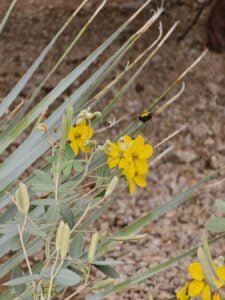
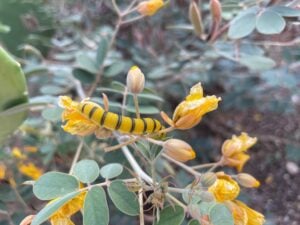
A true habitat plant—Desert Senna provides seeds for birds, nectar and pollen for bees (bumblebee on left), and is a great food source for caterpillars (Cloudless Sulphur caterpillar on right).
Harvest the Seeds
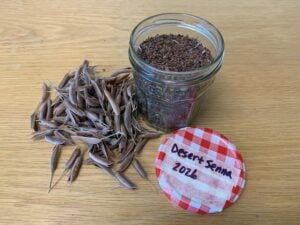
Upon maturing, Desert Senna seed pods will turn from green to brown. When collecting, they should be dry and brittle to the touch. Look for seed pods that have started to crack open along the top of the pod. Twist the pods off the plant and store them in a paper bag in a dry location. Use a strainer to separate the seeds from the pods. For long-term storage, store the seeds in a glass jar in a cool, dry and dark location like a closet or drawer. Wait for rain and cast the seeds in your landscape.
Once you have at least one Desert Senna growing, you’re guaranteed to have lots more.
Editor’s Note:
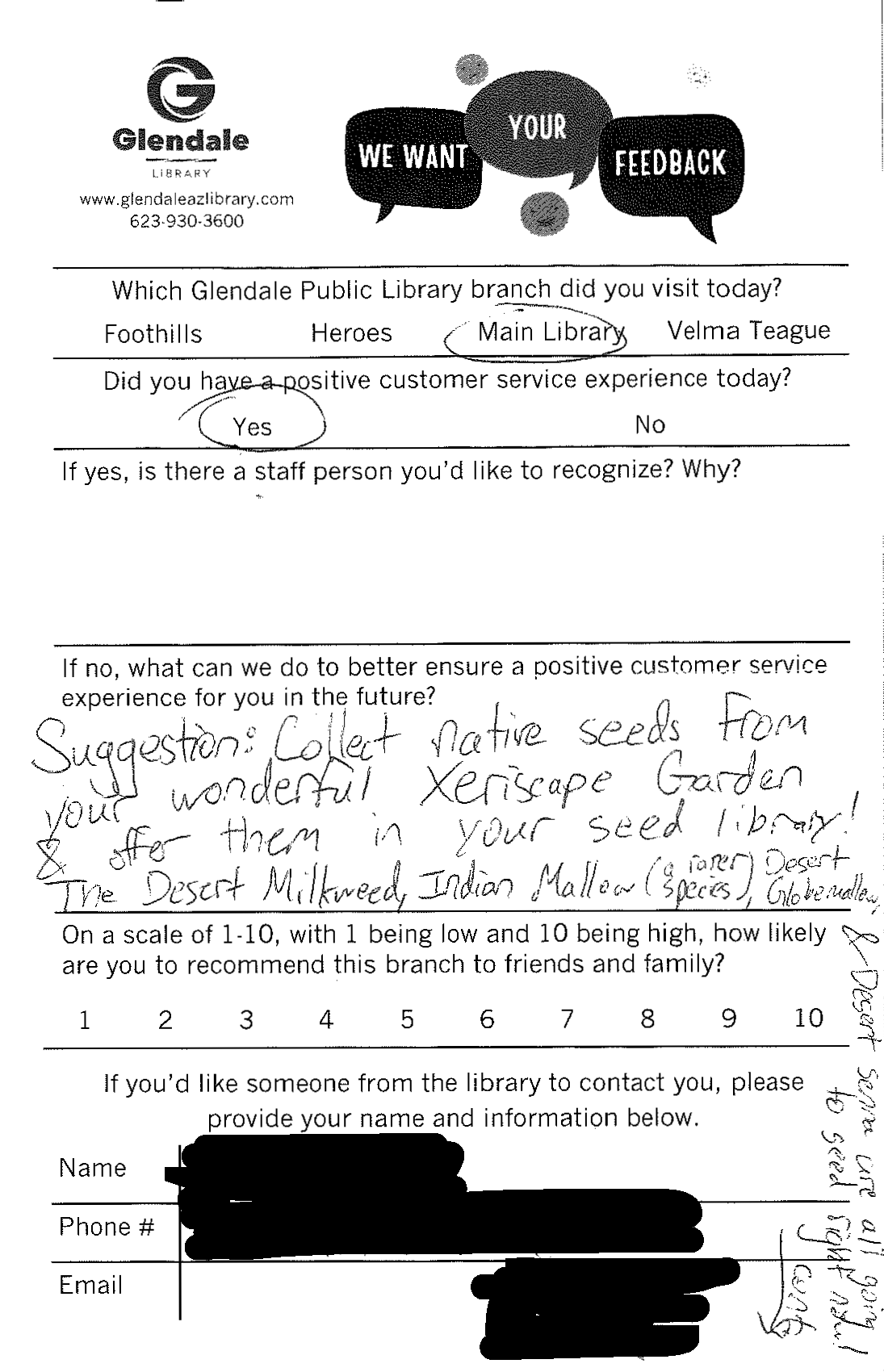
Coincidentally, the same day this blog was submitted, the City of Glendale received a comment card from a visitor to the Glendale Xeriscape Demonstration Garden suggesting that the garden collect and offer native seeds through their seed library.
The visitor wrote:
“Suggestion: Collect native seeds from your wonderful Xeriscape Garden & offer them in your seed library!
The Desert Milkweed, Indian Mallow (a rarer species), Desert Globemallow, and Desert Senna are all going to seed right now!“
The good news? The adjacent Glendale Library (5959 W. Brown St.) does offer a Seed Library, where many of these native seeds are available to the community. They love seeing visitors notice and appreciate the value of these desert-adapted plants—and even more when they’re excited to grow them at home.
Did you know that up to 70% of water use is outdoors? That is why we love desert plants and feature them each month. You can learn more about Desert Senna and other plants on our Arizona Low-Water-Use Plants page. Visit our page on Choosing and Planting Low Water-Use Plants for tips on plant selection and how to plant properly.
Also, be sure to read through all of our featured Plant of the Month blogs!
Joanne Toms is an Environmental Program Administrator with the city of Glendale, Arizona, one of 23 Water – Use It Wisely partners to offer water-saving advice and programs. Joanne is a Master Gardener and seed collector, who contributes native plant seeds to the City of Glendale Seed Library. She inherited a love of gardening from her grandma and dad.