

This month’s Plant of the Month blog spotlights another standout selection from the newly revised Cool Plants for Hot Gardens by Greg Starr — a must-have guide for any desert gardener! With 150 water-wise picks perfect for the Southwest, it’s no surprise we’re big fans here at Water – Use It Wisely. One of our favorite features? Greg’s playful deep dives into the etymology (the origin of each plant’s scientific name) and his fascinating field notes (he somehow kept track of) from observing these plants in their natural habitats. Who knew botany could be this entertaining?
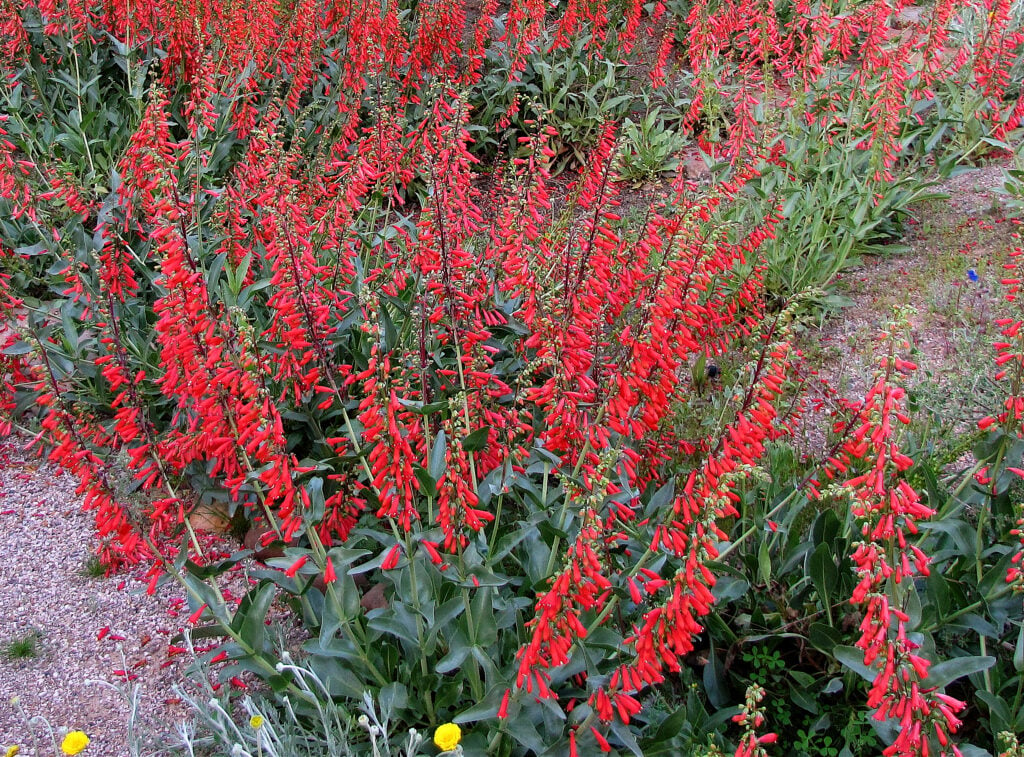
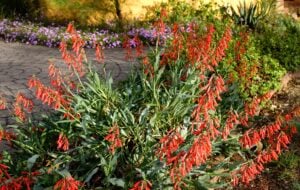
Firecracker Penstemon, Penstemon eatonii
PERENNIAL
AT-A-GLANCE
Attracts bees, hummingbirds.
|
Etymology
American botanist Asa Gray names this after American botanist Daniel Cady Eaton who was one of the discoverers of the plant.
Field Notes
I sometimes ride my bicycle up the Mt. Lemmon Highway in the Santa Catalina Mountains north of Tucson in late spring early summer. When I get to about 4,000 feet elevation, I look for the bright scarlet-red flowers that are visible above the deep green foliage on plants along the roadside. Penstemon eatonii is widespread throughout much of western United States and is commonly seen on mesas and roadsides in sandy or rocky clay soil from about 2,000-7,000 feet elevation.
Description
These are low-growing shrub-like spring to summer flowering perennial herbs that, with the flower stalks, get 2-3 feet tall and 2-3 feet across. Dark green to glaucous blue-green leaves are 3-5 inches long and 1-1½ inches wide. Hummingbirds will quickly target the bright scarlet-red 1-inch-long flowers on stalks rising 1-2 feet above the low mound of leaves. Flowering can start in late winter and continue into early summer.
Culture
This showy penstemon, hardy to at 5˚F and probably lower, is great for use in USDA zones 7b-11. Plants are low- to moderate water-using but will respond with more flowers and a longer bloom season when the root zone is thoroughly soaked every 10-14 days from fall until early summer. These will certainly benefit passive rainwater harvesting when planted at the edge of a water capturing basin. For best blooming, place plants only in full sun. They are not particular about soil and will grow fine in one that is rocky with good drainage. Cut back old flower stems as the pods turn brown, save the seed, and then scatter it around your yard in the fall.
Identification
Penstemon eatonii is easily recognized by its shape, leaf color, and spiked of scarlet-red flowers that often hang to one side of the inflorescence.
“Flowers will be an instant hit with hummingbirds sucking up all the energy they can from the sweet nectar produced.”
Landscape Application
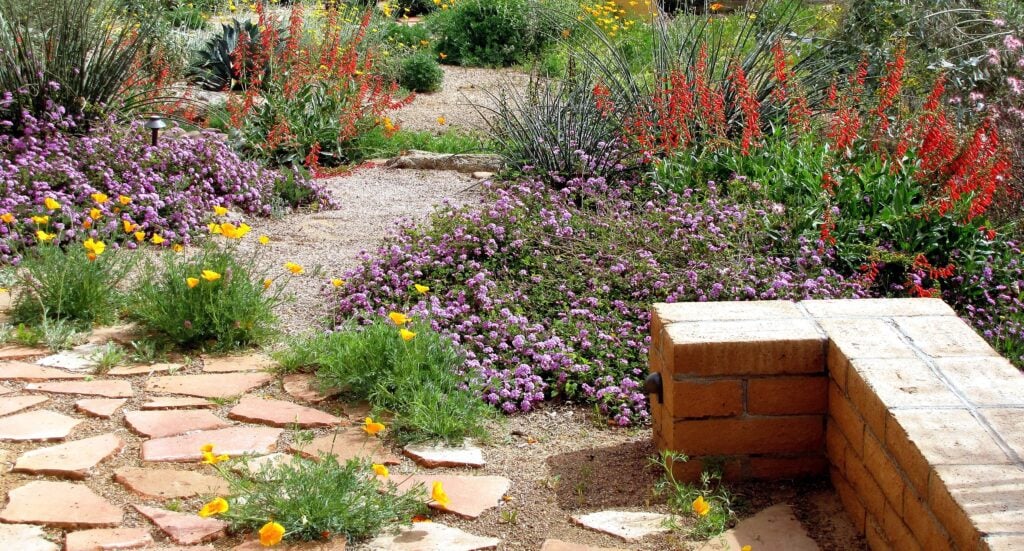
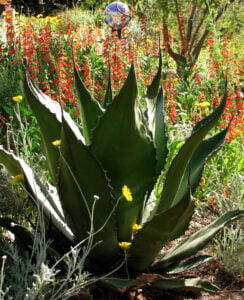
Place these perennials in full sun in any southwestern xeriscape and let them add a splash of color in late winter and spring when many desert plants are still dormant. Flowers will be an instant hit with hummingbirds sucking up all the energy they can from the sweet nectar produced. These are great plants to place near large rocks or around big bold accent plants such as: Agave gentryi, Agave schidigera, Dasylirion acrotrichum, Hesperaloe funifera, or Yucca rostrata. Plants with other spring flowering perennials such as Baileya multiradiata, Encelia farinosa, Glandularia gooddingii, and Thymophylla pentachaeta.
Precautions
Aphids and mealybugs could be a problem on new growth, while emerging flower stalks will need to be screened from hungry bunnies.
~ ~ ~ ~ ~ ~ ~ ~ ~ ~ ~ ~ ~ ~ ~ ~ ~ ~ ~ ~ ~ ~ ~ ~ ~
Did you know that up to 70 percent of water use is outdoors? That’s why we love desert plants and feature them each month. It’s still a great time to plant penstemons and other plants. Learn more on our Arizona Low-Water-Use Plants page. Visit our page on Choosing and Planting Low Water-Use Plants for tips on plant selection and how to plant properly. Also, be sure to read through all of our featured Plant of the Month blogs!
You may also enjoy: Plant of the Month: Penstemon where you can learn about other varieties and colors available.
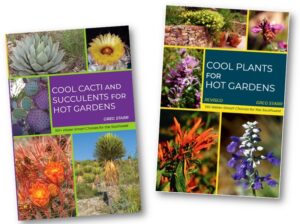 Water – Use It Wisely is proud to feature guest bloggers who write about topics related to water and water conservation. Greg Starr is a horticulturist and the owner/manager of Starr Nursery located in Tucson, AZ. It is a mail order nursery where you can shop online. Greg has traveled extensively in Mexico and the southwestern United States to study native plants for their potential landscape use in desert regions of the world. In 2009, Greg entered the world of literature as an author with the publication Cool Plants for Hot Gardens. This book is now revised in its second edition publishing in December of 2021. His latest book, Cool Cacti and Succulents for Hot Gardens published in October 2024. Both books are available online.
Photos by Donna DiFrancesco.