
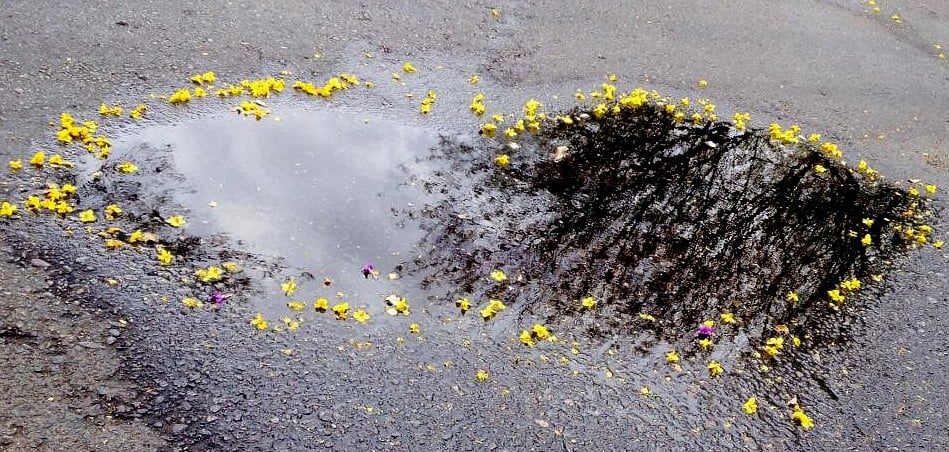
Rain in the desert has a way of getting our attention. We step outside and take a deep breath to catch that unmistakable scent of desert rain – a fresh, earthy aroma known as petrichor, made even more distinctive by the fragrance of rain-soaked creosote. Then, we check the rain gauge. We send photos to friends or post them on social media. We may even stand at the window and watch it fall like it’s a major sporting event.
But once the clouds clear, there’s one more thing worth doing: put that free water to work.
Whether it’s a summer monsoon, a gentle winter rain, or one of those wonderfully unexpected Arizona showers, rainfall is an opportunity to give your irrigation system a break, help your landscape, and keep more water on your property.
And when we use that free water instead of turning on the irrigation, we’re conserving our community’s water supplies, too.
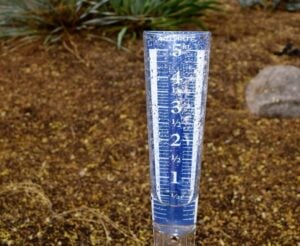
First Things First: How Much Rain Did You Get?
Arizona rainfall can be incredibly localized. One neighborhood may get a soaking while another a few miles away barely gets enough to settle the dust. That’s why the forecast – or even the puddles in the street – doesn’t necessarily tell you how much water your landscape received.
A simple rain gauge is the best way to know.
Don’t have one? Check nearby rainfall totals through the Maricopa County Flood Control Rainfall Map. Find a map for the Tucson area at the Pima County Flood Control Rainfall Map. You can also find rainfall data statewide from local weather watchers on the Rainlog.org site. Just remember that even nearby gauges may have received a different amount than you did.
And yes, checking the rain gauge after a rain or the next morning is half the fun.
Give Your Irrigation System (and Your Water Bill) a Break
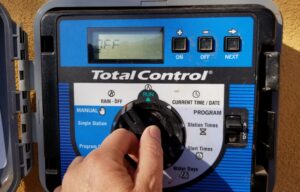
If Mother Nature just watered your landscape, there’s no reason to immediately water it again.
If you’ve received about ½ inch of rain or more, consider skipping your next scheduled irrigation. Many irrigation controllers have an off, stop, or rain setting that allows you to temporarily pause watering without changing your programmed schedule.
Have a smart irrigation controller or rain sensor? Even better. Check that it’s working properly and responding to rainfall as expected.
How long can you leave the irrigation off? That depends on how much rain you received, the season, your soil, and the needs of your plants. Rather than automatically turning the system back on, check the soil and let your landscape tell you when it needs water again.
Free water is good. Using it instead of purchased water is even better.
Keep the Rain Where It Falls
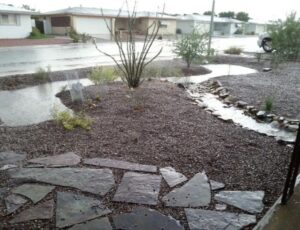
Here’s where a rainstorm can become an even bigger water-saving opportunity.
Instead of allowing rainfall to rush off your roof, across your property, and into the street, look for ways to slow it, spread it, and sink it into your landscape.
Passive rainwater harvesting can be as simple as directing a downspout toward a planted area or creating shallow basins around trees and shrubs where water can collect and soak into the soil.
And those gallons add up quickly. One inch of rain falling on a 1,500-square-foot roof can produce roughly 900 gallons of water.
That’s a lot of free water worth keeping in your landscape.
Discover more on this topic, including tips, benefits, and great resources on our Rainwater Harvesting page!
Instead of allowing rainfall to rush off your roof, across your property, and into the street, look for ways to slow it, spread it, and sink it into your landscape.
Check Your Landscape After the Storm
Rain is also a good excuse to take a walk around the yard.
Look for areas where water collected, ran off the property, or caused erosion. Did water flow toward your plants – or right past them and into the street? Are your gutters and downspouts sending water somewhere useful? Did strong winds damage trees or irrigation equipment?
Each storm gives you a chance to see how water moves through your landscape and identify small changes that could help you capture more of it next time.
And Please… Don’t Water in the Rain
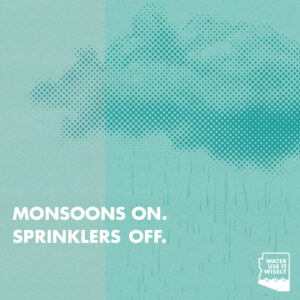
We’ve all seen it: sprinklers running while rain is falling.
If your irrigation system is watering during or immediately after a good rain, consider it a friendly reminder to check your controller. Seasonal adjustments, rain sensors, and smart controllers can all help prevent unnecessary watering.
Because while we may not be able to predict exactly when Arizona’s next rain will arrive, we can be ready to make the most of it when it does.
So check the rain gauge, pause the irrigation, capture what you can – and enjoy every drop. 🌧️💧
Want to Learn More—or Do More? 💧
Ready to put these ideas into practice? Water – Use It Wisely partners offer workshops, resources, and even financial incentives to help Arizona residents make the most of rainwater.
💰 Tucson: Get a Rebate for Harvesting Rainwater
Thinking about adding rainwater harvesting features to your landscape? Tucson Water offers rebates for qualifying rainwater harvesting systems, helping residents save water – and money – while putting rainfall to good use. Learn about Tucson’s Rainwater Harvesting Rebate.
🎓 Learn How: Upcoming Workshops & Classes
Want to learn the basics or take your water harvesting skills further? There are a number of exciting classes being offered by our Water – Use It Wisely partners:
- Phoenix | September 30 – October 28: Hydrate Phoenix 2026 A five-class series discussing Rainwater Harvesting, Rain Garden Care, Sustainable Living 101 for Renters, Cultivating Native Edible Plants, and Building Healthy Desert Soils
- Tempe | October 3 – March 27: Rainwater Harvesting Workshop Series Join the City of Tempe Sustainability team and Watershed Management Group for an impactful six-part series of workshops to learn how you can create your ideal desert landscapes while harvesting rainwater.
- Gilbert | November 7: Rainwater Harvesting Learn how to capture and put rainwater to work in your landscape. Taught by Jonah Ivy.
- Goodyear | November 7: Stormwater Fundamentals & Rainwater Harvesting Understand your personal impact on stormwater and how to maximize free rainwater for your yard’s plants. Taught by Ryan Wood
- Gold Canyon/AZ Water Company | November 14: Rainwater Harvesting Learn about rainwater harvesting techniques that you can implement in your landscape. Taught by Ryan Wood.
- Mesa | November 21: Water Harvesting 101 Discover how to put rainwater to work in your landscape with simple passive harvesting techniques like grading and basins. Taught by Kaylee Colter.
Rain Is Music to Our Ears 🎶
And lastly – just for fun… At Water – Use It Wisely, we can’t help ourselves. Rain in the desert deserves a soundtrack! That’s why we’ve created our Monsoon Melodies playlist on Spotify.
Rainy day? Turn it up, watch the clouds roll in, and let Mother Nature do the watering.
Keep Exploring
-
Cultivating Resilience: How Green Stormwater Infrastructure is Transforming Arizona Yards
- It’s Monsoon Season. What To Do When a Storm Hits
- Help Track Rainfall with Rainlog.org and Make a Difference
- Why Pay for Water When It’s Free? All about rainwater harvesting.
- Top 5 Reasons to Collect Rainwater for Your Landscape
- Prepare for Monsoon Season with These 5 Landscape Tips
- Cutting the Curb for Beneficial Use of Stormwater
Donna DiFrancesco is a Horticulturist and Conservation Coordinator with the City of Mesa, AZ, one of 23 Water – Use It Wisely partners to offer water-saving advice and programs. She has also been known to get a little wet – and step in a few puddles – in the pursuit of photographing good rainwater harvesting examples.