
The Arizona Green Plumber Talks About “Water-Use It Wisely”
Thursday, May 3rd, 2012Join host John Smith on blogtalkradio as he talks with Donna DiFrancesco from the City of Mesa about the development of the Water-Use It Wisely campaign in Arizona.
Join host John Smith on blogtalkradio as he talks with Donna DiFrancesco from the City of Mesa about the development of the Water-Use It Wisely campaign in Arizona.
Water Awareness Month is going on right now, and we can use your help! As readers of this blog, you are already water-aware and can probably name many of the 100+ water-saving tips on the Water – Use it Wisely website. Of course, first on the list is “There are a number of ways to save water, and they all start with you.” In this spirit, we would like to ask a favor.
As knowledgeable water ambassadors, help spread the word about Water – Use it Wisely and Water Awareness Month to your friends, family, neighbors and co-workers. If you’re not familiar with Water Awareness Month, visit the interactive calendar that matches each day in April with a water conservation topic. For example:
Day 24: The True Cost of Bottled Water
Day 25: Ask the Water Experts
Day 26: Grow Green Kids
Day 27: Trees: Treat it With Care. Give it Clean Water, and Feed it Fresh Air
Day 28: Rainwater: It’s Free, Fresh and Filling
Day 29: Lawn Envy
Day 30: Choose How You Use
Each topic features tips, events and resources with photos to help us all practice a low water-use lifestyle. With over 500 ideas and activities on the site, there is something for everyone (maybe even a surprise or two.) It’s easy to help spread the word. Like us on Facebook, follow us on Twitter, and of course, visit us on the web.
Happy Water Awareness Month!
Water – Use It Wisely features guest bloggers who write about water conservation and education. Jo Cook owner of Cook Internet Consulting is a member of the Arizona Water Awareness Month steering committee.
It seems like everywhere you turn nowadays, both businesses and individuals are encouraging you to reduce, reuse, and recycle. In fact, the very words “going green” immediately bring conservation thoughts to mind. When was the last time you heard the word, “plumber,” though, and thought about sustainability? You should! With the advice of your plumber, you can make some very simple changes around your home or business to save significant amounts of water.

One of the biggest water wasters in the home - the toilet.

Look for the WaterSense label
Let’s begin with the biggest offenders, starting inside your home. According to the Alliance for Water Efficiency, toilets are the biggest culprits, accounting for approximately 26.7% of the water used daily inside the house. By simply switching over to high-efficiency models of toilets, homeowners can make a huge dent in this number. The best part—unlike “low flow” models of previous years, today’s high efficiency toilets (HETs) are designed, tested, and proven to take care of business with very little water. Some models (look for the EPA WaterSense Label) actually use less than one gallon per flush!

Use a water efficient shower head
Showers are another area in the home where water is wasted, responsible for about 16.8% of household daily water usage. I used to think that these numbers somehow didn’t apply to me. My morning showers seemed way too short in my eyes—I literally used them as a way to wake myself up for the day. I was in for a rude awakening after I received a water flow measurement bag at a green education event and slipped it under my shower head to see how I was doing. My much-beloved “rain type” shower head was dousing me with 100 gallons of water each time I showered! I had two choices to save water: switch my shower head to a high efficiency model, or shorten the time I was in the shower. In the end I did both and I learned an important lesson in doing so. Sometimes the least expensive and most effective way to conserve resources is by simply changing our habits!

Fix that leaky faucet and save gallons!
How about that dripping faucet you keep meaning to fix? How does it measure up on the “wasted water” scale? While you certainly may be losing a few gallons a day, it’s worth taking a look at your faucet as a whole. Faucet use adds up to about 15.7% of a household’s daily water usage. Did you know that simply by installing aerators on your bathroom and kitchen faucets, you can save up to a gallon of water per minute, per faucet? What’s even better—it’s a change no one will notice! That doesn’t mean to ignore those leaks, though. In fact, any leak stopped helps the cause.
In addition to those obvious sink leaks (and who doesn’t hate that annoying dripping sound?), there are less obvious leaks lurking in your home, wasting your precious water. The easiest of these leaks to detect on your own is a leaky flapper in your toilet. Here’s a test: open the tank of your toilet and put in a few drops of food coloring. Go ahead, be creative! Mix colors for some extra fun! Replace the tank lid and wait a good 5-10 minutes or so. When the time is up, check the bowl of the toilet. If any color has made its way down into the bowl, you have a leaky flapper. Unfortunately, this means that your toilet is wasting water. Fortunately, replacing the flapper on your toilet is an easy fix. Simply take the model name and date of manufacture of your toilet (stamped inside the tank) to your local plumbing supply house and they will help you find a replacement flapper. Note: do not waste your money on a “universal” toilet flapper, as it will not fit your toilet the way the proper part is made to.
Keep in mind that any amount of water that we save, inside or outside our homes and businesses, is a step in the right direction. Conservation is not a single act, but a process towards a common goal. Make use of the resources around you- both products and professionals- who can help you find water-saving solutions that are comfortable for your lifestyle. Perhaps the most important thing of all to remember is that any effort to save Earth’s precious resources is worthwhile. After all, there is no perfect shade of green.
John Smith is the Vice-President of R2K Plumbing, The Arizona Green Plumbers,* and the author of Plunging Into Green, One Plumber’s Journey to Becoming a Water Hugger. John was named the 2010 and 2011 Green Plumber of the Year and is the host of The Arizona Green Plumber Show on BlogTalk Radio. For more water-saving tips, follow The Arizona Green Plumbers on Facebook.
*GreenPlumbers USA®
GreenPlumbers is a national training and licensing program to advance sustainable plumbing practices that will use less energy, less water and fewer chemicals. Savings within new and existing buildings can be from efficient heating, cooling, and hot water systems, as well as from water-efficient fixtures and appliances, and by the harvesting and use of alternative water sources. Be sure to check with your power or water utility to see if rebates are available for the purchase of efficient products.Learn more about Green Plumbers and other organizations involved in water conservation efforts on the Water – Use It Wisely Resources page.

It’s a Party for the Planet! On Saturday, April 21 from 9 a.m. to 4 p.m. be sure to celebrate Earth Day, conservation and nature at the Phoenix Zoo.
Water – Use It Wisely will be joining in on the fun once again with our fun-in-the-sun duck float trivia contest. Children young and old can test their water know-how, then take home one of our “oh-so-cute” ducks to float in the pool or bathtub to help remind them to use water wisely every day of the year – not just on Earth Day.
Visit us at the Harmony Farm section of the Zoo. Don’t worry; we have a lot of cool stuff for the “big” kids, too. See you there!

Swimming pools are great to help us beat the heat, but occasionally we may need to beat the leak! Pools can leak constantly or may only leak when the pool equipment is running. This can lead to water waste and a high water bill, and with pools being one of the greatest water users outdoors, it’s important to make sure they are being operated as efficiently as possible.
Leaks in your pool system may be difficult to find, even if you have used your meter to check for leaks*, for one of two reasons. First, if you have an autofill device, it will continue to keep the pool’s water level the same by adding water on a more frequent intermittent basis. Second, if you fill the pool yourself with a hose, you may not notice that you are adding water on a more frequent basis.
Most leaks associated with the pool are found in the pool equipment. Periodically turn the pool equipment on and look for visible leaks. Look for white crusty mineral deposits on pipes which could indicate a slow leak. Also, look for wet spots on the ground around the pool, pool equipment, and between the equipment and the pool.
You can read the instructions below or watch: How to Video for the Bucket Test

• Repeat the test with the pool equipment running.
• Repeat the test with the pool equipment manually turned off so it can’t run.
If tests reveal that more water was lost with the pool equipment running, the pool’s plumbing is probably the cause.
If you have a high water bill and you’re not sure if it’s the pool or something else on your property, start your search by using your water meter as a leak detection device. Watch our How to Read Your Meter video!
Note: If you live in Phoenix, your meter reads in cubic feet. One cubic foot equals 0.748 gallons. So, if you determined that 100 cubic feet were used during a meter test, then 74.8 gallons was used. All you have to do is multiply the cubic feet by 0.748.
Scottsdale is one of fifteen Water – Use It Wisely regional partners who offer conservation assistance to water customers. Contact your local water conservation office.
The combination of aging irrigation systems and decades-old traditional overhead spray nozzles can result in large and unsightly brown spots in grass areas. Up until recently, traditional spray nozzles were the only option to irrigate grass areas between 5’-15’.
What is a traditional spray nozzle, you ask? In a nutshell, it’s any nozzle that delivers small water droplets quickly and in a fan shaped pattern. Due to the high flow of water coming out of traditional spray nozzles (almost 2 gallons per minute, 15’ half-circle), many aging sprinkler pipes get mineral buildup and can no longer provide the needed pressure to deliver water evenly between the originally designed head-to-head spacing. Most homeowners try to solve this issue by simply increasing run-times until the brown spots disappear. However, while this solution may improve the look of the site, it results in a tremendous increase in water consumption, with some areas getting a lot more water than needed, which is both costly and environmentally unfriendly.
Homeowners can take a cue from landscape professionals, who have learned to rely on multi-stream rotating sprinkler heads, such as the Hunter MP Rotator. The MP Rotator features a unique, multi-trajectory rotating stream delivery system that achieves water-conserving results. Rather than simply “spray” water onto landscapes, MP Rotators deliver multiple streams of water at a slow, steady rate. The reduction in flow will boost system pressure allowing the MP Rotator’s multi-stream “moving fingers” to achieve previously compromised head-to-head spacing.

This is what makes MP’s perfect for revitalizing older systems—the retrofit can solve both low pressure and poor coverage problems. The MP Rotator can be installed onto any conventional spray head body transforming them into high uniformity, low precipitation rate sprinklers. But be careful. Because the MP Rotator has a much lower flow rate (1/2 gallon per minute, 15’ half-circle) compared to a traditional spray nozzle, a complete removal of ALL traditional spray nozzles on a single valve (station) must be done. By mixing MP Rotators & traditional spray nozzles on a single valve (station), an already inefficient system will only become worse.
Another added benefit is the MP Rotator’s compatibility with Arizona soil absorption rates. Most Arizona landscapes consist of clay soil profiles capable of absorbing only a ½” or less of water per hour. In Water – Use It Wisely’s 100+ Ways to Conserve, # 18 states If water runs off your lawn easily, split your watering time into shorter periods to allow for better absorption. That’s because most traditional spray nozzles deliver water at flows 100-200% faster than what Arizona soils can absorb. Due to the MP Rotators “Slow-the-Flow” nature, it delivers water to your landscape at a much slower rate therefore minimizing or eliminating unnecessary run-off. This slower application rate allows water to gently soak into the soil, and achieves an even distribution throughout the area being irrigated. This increased efficiency results in 30% less water use when compared to traditional sprays, and significantly reduces wasteful runoff.
MP Rotators are also a great choice for new systems, as they provide immense range, flexibility and provide better system efficiency.
From time to time, WUIW features guest bloggers who write about water conservation and education. Danny Motylewski from Hunter Industries is our guest blogger this week. Hunter Industries is committed to research and development efforts centered on innovative solutions that save water, and they always have been. Moving forward, their focus towards water and energy conservation will continue every day.
Everyone enjoys a patch of lawn. It’s cool to walk on barefoot, a comfortable spot for adults to gather and relax outdoors, and children and pets enjoy playing on it. But lawns do use a lot of water, and with up to 70% of your water use outdoors, the ideal lawn is one that will grow in our desert environment using water as efficiently as possible. One of the easiest and smartest things a homeowner can do is to replace their old-fashioned sprinkler spray nozzles with new water efficient nozzles.
Conventional “fixed spray heads” are the small heads that spray a fan-shaped pattern of water, somewhat like a shower nozzle spray. They apply water at a relatively fast rate which may not allow the water to soak into our tight clay soils and may contribute to runoff. Fixed spray nozzles are often prone to ‘misting’, an extremely fine spray that can evaporate quickly or drift easily in wind.
Replacing old spray heads with new, more efficient models can reduce your water use and save you money. This is easier than you might think. In most cases it’s not necessary to replace the entire sprinkler housing, just the spray nozzle. If you can unscrew the cap on a bottle of water and then put it back on, you can replace a sprinkler nozzle. In just a few minutes you can give your irrigation system a tune up, conserve water, reduce puddling and water running into the street, and improve the health of your grass.

Rainbird Rotary Nozzles (Credit: www.rainbird.com)
New sprinkler products on the market can save as much as 42 percent on the amount of water applied to your lawn. And, because the water is applied more slowly, and in droplets instead of mist, it soaks deeper into the soil and with less chance for runoff. They also deliver water more evenly over their entire coverage area, a vast improvement over conventional sprinklers.
Click on the ‘Lawn Stars’ listed below to learn more about various types of spray heads and even help for unexpected geysers. These products are available from a variety of manufacturers.
It’s easy to change a spray nozzle. Read on for simple tips.
Replacing a sprinkler spray nozzle:
That’s it. In just a few minutes you’ve updated your sprinkler system, saved water, reduced runoff and made your lawn just a little bit healthier.
For more landscape and irrigation tips, please visit www.chandleraz.gov/water
Chandler is offering landscape watering workshops throughout the month of April. Topics include yard watering & timer programming, sprinkler design and how to maximize your irrigation. Find detailed descriptions and programs offered by Chandler and other Water – Use It Wisely partners at the Water – Use It Wisely calendar on our home page.

April is a great month to celebrate nature! Earth Day is April 22, Arbor Day is April 27 and the whole month is dedicated to water awareness.*
Join the City of Mesa for a ‘speed dating’ version of environmental learning by attending any or all three programs. Information booths on multiple topics will provide interactive opportunities between each session:
Celebrate Nature:
Butterflies, Trees and Being Green
The program is free and no registration is required. Visit Mesa’s sustainability page or call (480) 644-4400.
The City of Mesa is one of fifteen Water – Use It Wisely regional partners, and many offer water-wise workshops. Check out all of the partner programs on the Water – Use It Wisely Calendar on our home page.

*Water Awareness Month takes place in April in Arizona to emphasize the importance of using water more efficiently. Practicing a low water-use lifestyle is a way each individual and business in Arizona can help ensure a long-term, sufficient water supply. You can make a difference in our future by making small changes, starting today. Find hundreds of tips and links at the Arizona Water Awareness Month site.
Did you know Water Awareness Month is coming up? For the month of April, stay tuned to this interactive calendar at waterawarenessmonth.com for ways to save water and plenty of links and resources!
Our very own Donna DiFrancesco, Conservation Specialist from the City of Mesa, was featured in April’s Phoenix Home and Garden magazine giving some information about what people can do for Water Awareness Month! Check it out!

At Water – Use It Wisely, we are proud to see that our website is the top-ranked site for popular search terms such as “water conservation” and “water saving tips,” but did you know that a single query on Google consumes a tenth of a teaspoon of water?

Image courtesy of Argonne National Library
Just when you thought that saving water was as easy as turning off the water when brushing your teeth, experts are trying to get another point across to consumers… saving energy can also save water! The electrical power industry is one of the largest users of water in the United States. However, we can’t forget that the opposite is true too… that the delivery and treatment of water also consumes a lot of energy (see Arizona examples below).
This estimate of water use for data centers such as Google is noted by Liew Yien Phin, from Black & Veatch, a global environmental engineering firm. Check out his fascinating blog, The Nexus of Water and Energy, where he discusses the serious implications of this relationship.
Perhaps Water – Use It Wisely should add a new water saving device to our lineup…. Water Saving Device # 113, A Dictionary. Next time you need the definition of a word pull your dictionary off the shelf instead and save a tenth of a teaspoon of water every time. But since you’re already on our page, be sure to learn about our other 100+ ways to conserve water.
Arizona Examples of the Water – Energy Nexus
Water Needed for Energy: Did you know that our local Palo Verde Nuclear Generating Station uses 50 to 80 million gallons of water each day to meet its cooling needs? Fortunately, almost all of it is effluent (treated sewage) from several nearby municipalities.
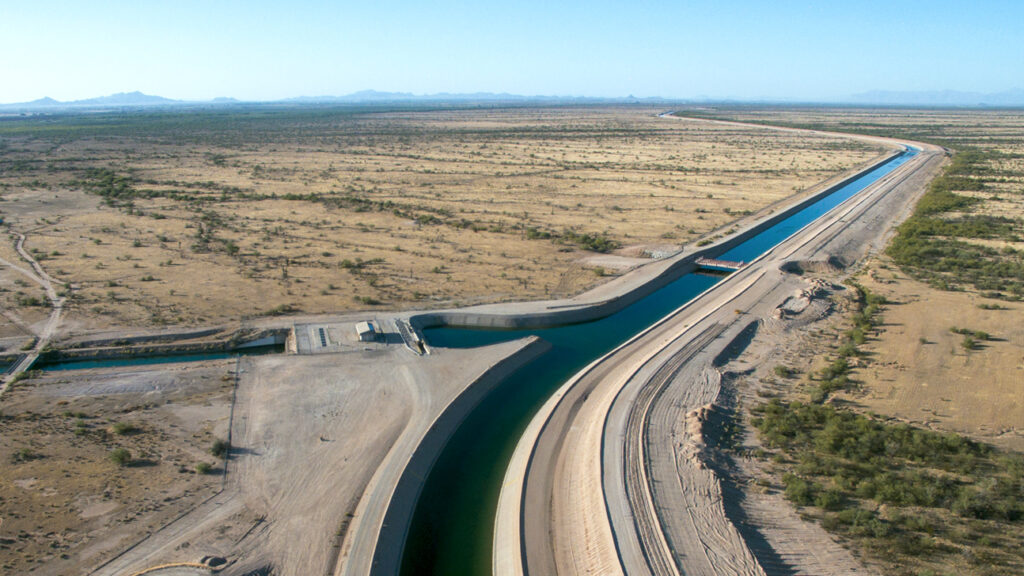
Energy Needed for Water: Have you followed the controversy of the Navajo Generating Station coal-fired plant in northern Arizona? The EPA and conservationists are concerned about environmental impacts from emissions, especially since the plant is located near National Parks, monuments and wilderness areas. Power from the plant is needed to deliver Colorado River water through the Central Arizona Project system that delivers the water to the state’s more populated areas.
You can promote your own contribution to smart water use and management by advertising on WaterUseItWisely.com, the number one water conservation website on the internet. If you’re interested in being a guest blogger, contact us.